

Your local market is tapped out. The real growth, the empire-level money, isn’t next door—it’s overseas. While you’re fighting for scraps in a saturated market, a UK jewelry maker is getting their ‘Made It’ moment selling to someone in Texas, and an Aussie leggings company is scaling to $5M by selling to the world. They’re not smarter than you; they just went global. And the cross-border e-commerce market is set to explode to over $2 trillion by 2034. This isn’t a trend; it’s a gold rush.
They’re not smarter than you; they just went global. This is how you do it too.
You’ve built something from nothing. You’ve poured your blood, sweat, and discipline into this hustle. But if you’re only selling to people in your own country, you’re building a wall around your own ambition. You’re leaving a massive piece of the pie on the table—a pie that’s growing at a blistering 15.44% every single year.
This isn’t some theoretical fluff piece. This is a practical, zero-bullshit playbook for expanding your side hustle cross-border. We’re going to break down the systems, crush the complexities, and give you the exact steps to take your hustle from a local hero to a global legend. The excuses are over. Let’s freaking go!
The World is Screaming for Your Product: Why Global is a Non-Negotiable Power Move
Still thinking an international side hustle is a “nice to have” for later? Wake up. By 2025, nearly one-third of all global online retail will be cross-border sales. If you’re not in the game, you’re not just missing out; you’re actively choosing to shrink your potential. This isn’t about adding a few extra sales. It’s a non-negotiable power move for explosive growth.
Your future customers are already shopping globally. A staggering 43% of Gen Z shoppers buy from other countries at least once a month. They are digital natives who don’t see borders; they see brands they vibe with. They are scrolling Instagram and TikTok, ready to buy from you, whether you’re in Ohio or Oslo. The question is, are you ready for them?
And forget the old myths that it’s all about selling to the US or the UK. The game has changed. The fastest-growing e-commerce markets on the planet are in Southeast Asia and Latin America. We’re talking about the Philippines (24.1% growth), Thailand (20%), and Malaysia (15.5%). These are hungry markets, mobile-first, and looking for unique products—exactly like yours.
This is how you go from side hustle to main hustle. Just ask Neawear, a Canadian Etsy seller. She was a graphic designer selling jewelry on the side. After launching a new product line and embracing international customers, her sales tripled. Her realization? “I could live on this and stop doing graphic design.” That’s the power of global expansion for small business. It’s not just a sales channel; it’s a life-changing catalyst. Your “Made It” moment, like the handmade seller who feels proud that “something I make with my own hands is appreciated by somebody at the other end of the world,” is waiting for you across a border.
Before You Flip the Switch: Your Pre-Flight Checklist for Global Domination
Jumping into global sales without a plan is like jumping out of a plane without checking your chute. You need to fortify your foundation before you enable that international checkout button. Getting this right prevents lost packages, angry customers, and torched profit margins. This is your no-fluff checklist for selling internationally.
1. Is Your Product Ready for the World Stage?
First, the basics. Is your product even allowed in other countries? Check for prohibited or restricted items (e.g., certain foods, woods, or agricultural products). Is your product durable enough to survive a two-week journey in the back of a truck and on a plane? Can it handle temperature changes and rough handling? Finally, what’s its weight? Shipping costs are dictated by weight and dimensions, so know your numbers cold.
2. Optimize for Mobile, or Die.
This is not a suggestion. It’s an ultimatum. In booming markets like China, 64% of all e-commerce happens on a phone. In South Korea, it’s nearly 70%. If your store is clunky, slow, or hard to navigate on a mobile device, you’re already dead in the water. Your international customer’s first impression of your brand is on a 5-inch screen. Make it count.
3. Speak Their Language (and Currency).
Here’s a stat that should shake you: 75% of consumers prefer to shop in their own language. And they want to see prices in their own currency. Don’t make them do math. Use platforms like Shopify or Etsy that have built-in apps or settings to automatically detect a visitor’s location and display prices in their local currency. This isn’t just about translation; it’s about removing friction and building trust.
4. Kill Forced Account Creation.
Want to lose over a quarter of your potential sales? Easy. Force every customer to create an account before they check out. A brutal 26% of shoppers will abandon their cart if you make them jump through that hoop. The fix is simple: enable guest checkout. Make it as easy as humanly possible for people to give you their money.
5. Get Your Payment Game Right.
If you’re only offering credit cards, you’re stuck in the dark ages. By 2025, digital wallets are expected to handle over half (51.4%) of all cross-border transactions. Integrating payment gateways like Stripe or Shopify Payments is a non-negotiable. This allows you to offer local payment methods your customers actually use, like iDEAL in the Netherlands or Bancontact in Belgium, alongside global standards like Apple Pay and Google Pay. Don’t let a missing payment option be the reason you lose a sale.
Shipping Like a Boss: How to Move Product Without Losing Your Shirt
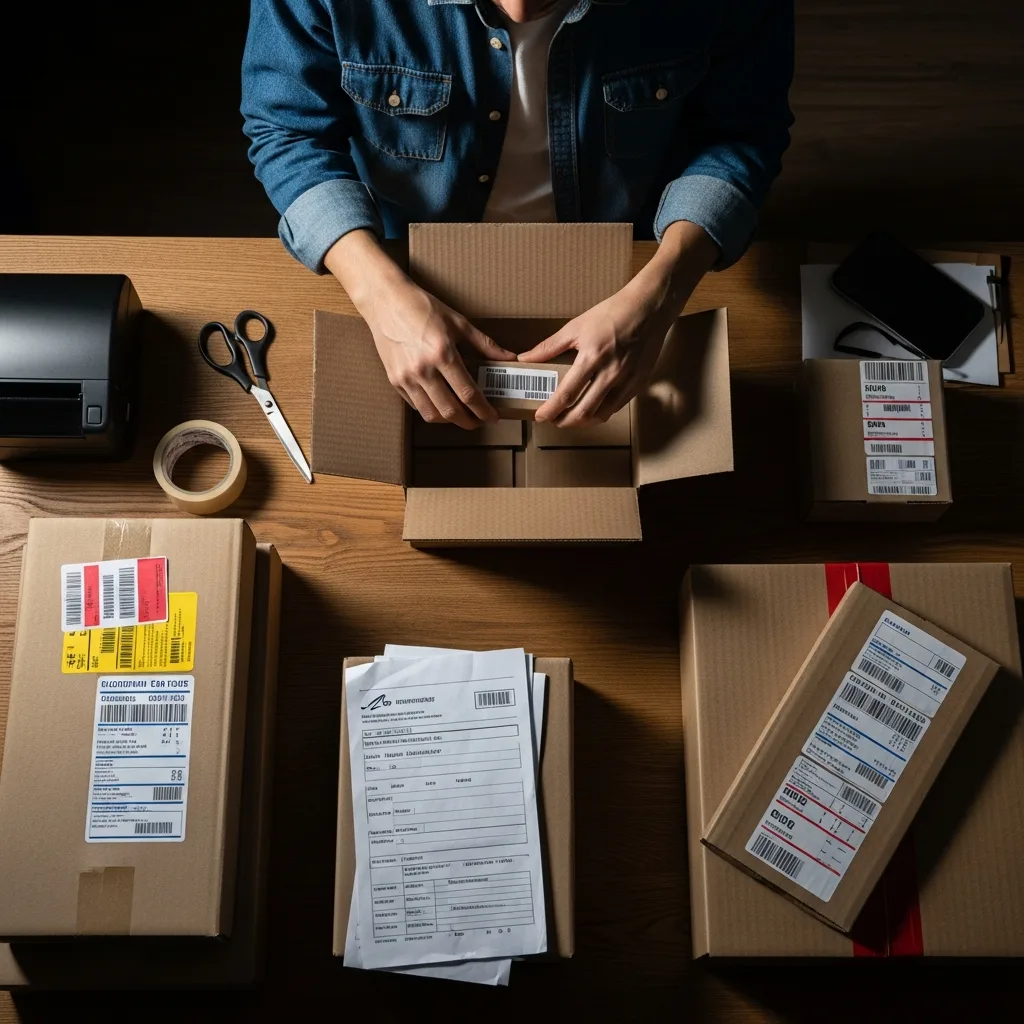
Logistics. It’s the word that makes most hustlers sweat. But conquering international shipping for side hustles is just a system. And once you have the system, you have the keys to the kingdom.
Let’s start with the #1 deal-breaker for your international customer: surprise costs. A whopping 48% of shoppers will abandon their cart because of high extra costs like shipping, taxes, and fees. The solution? Radical transparency. You need to be able to show them the full “landed cost”—the total price of getting that product into their hands.
DDP vs. DDU: The Only Pro Move
You’ll see two acronyms: DDU (Delivery Duty Unpaid) and DDP (Delivery Duty Paid). DDU might seem easier for you—you ship the item, and the customer is responsible for any customs fees upon arrival. This is a recipe for disaster. Your customer gets a surprise bill, gets angry, and might even refuse the package. When they do, YOU have to pay for return shipping, and you might lose the product and the sale.
DDP is the only choice for building a real, respected brand. It means you calculate and collect the duties and taxes at checkout. The customer pays one price, and the package sails through customs to their door. It’s a seamless experience that builds trust and earns repeat business.
Your Hustler’s Shipping Stack
- Cost-Effective Services: For lightweight packages, look no further than services like USPS First-Class Package International Service or GlobalPost. These were built for this.
- Unlock the Discounts: Digital platforms like Pirate Ship and ShipStation are your secret weapon. They give solopreneurs like you access to the commercial pricing and discounts usually reserved for the big players. You can print DDP labels directly from these platforms.
- “Price in Tracking.” A UK seller who now sees 50% of their sales come from abroad gave this advice: “Make sure to price in tracking.” It’s more expensive, but it’s non-negotiable. It provides peace of mind for both you and your customer, and it’s your only defense when a customer claims a package never arrived.
Beware the Margin Killers
Finally, watch out for the hidden costs that can wreck your profitability in cross-border e-commerce. The biggest one is the “remote area surcharge.” Carriers can slap this extra fee on deliveries to less accessible locations. If you offer flat-rate international shipping, one or two of these can completely wipe out your margin on a sale. Use your shipping platform’s calculator to check for these before you finalize pricing.
The EU Gauntlet: Turning Bureaucracy into Your Competitive Advantage
Selling to the European Union can feel like facing a dragon. It’s a massive, lucrative market guarded by a maze of regulations and taxes. Most hustlers get scared and run away. But you’re not most hustlers. You’re going to slay the dragon. By understanding the rules, you can turn this bureaucracy into a powerful moat that your lazy competitors will never cross.
The IOSS Cheat Code
Let’s demystify the first big one: IOSS (Import One-Stop Shop). In simple terms, IOSS is a system that lets you collect and pay the EU’s Value Added Tax (VAT) on orders under €150. Why is this a cheat code? Because you charge the VAT at checkout, your customer pays one final price, and the package flies through customs without being held for extra fees. It eliminates surprises and creates a killer customer experience. If you sell on a platform like Etsy, they often handle IOSS for you automatically. If you’re on Shopify or another platform, you can register for IOSS yourself through an “IOSS intermediary”—a service that files the paperwork for you. It’s a small cost for frictionless access to 27 countries.
The GPSR Power Play (And How Not to Get Banned)
This is the new big one, so listen up. As of December 2024, a new rule called the General Product Safety Regulation (GPSR) is in effect. It requires that most products sold into the EU (from toys and electronics to cosmetics and apparel) must have a “responsible person” based in the EU. This person’s contact information must be on the product or its packaging.
For the unprepared, this is a business-ending brick wall. Shipments will be rejected at the border. But for you, it’s a massive opportunity. While your competitors are getting their products seized, you’ll be sailing past them.
Action Step: Start planning now. Search for “EU Responsible Person services” online. These companies act as your legal contact in the EU for a fee. Budget this as a non-negotiable cost of doing business in Europe. This single step will put you leagues ahead of the competition.
The Good News
It’s not all hurdles. The EU is actually making things simpler. Starting in 2025, a new VAT scheme for small businesses will roll out, further simplifying compliance. The message is clear: the EU wants small businesses to sell there, but they want you to play by the rules. Learn the rules, and you’ll unlock one of the wealthiest markets in the world.
Your Empire Awaits

The excuses are gone. The playbook is in your hands. We’ve just dismantled every obstacle you thought was standing in your way.
The opportunity is not just a vague idea; it’s a $2 trillion goldmine. Your preparation isn’t a mountain to climb; it’s a simple, actionable checklist. International shipping isn’t a dark art; it’s a solvable system with tools built for you. And complex compliance like EU regulations? It’s just a series of steps that, once taken, become your competitive advantage.
While your competitors are stuck thinking locally, trapped in the same saturated market, you can be building a global empire. You can be the South African artisan who gets a life-changing wholesale order from a US company. You can be the Canadian jewelry maker who quits her day job. You can be the Aussie entrepreneur who builds a $5M brand from his laptop.
The only thing stopping you is the ‘checkout’ button on your own ambition.
Ready to take it global? Join the Tribe inside Side Hustle Academy for our deep-dive masterclass on Expanding Your Side Hustle Cross-Border, where we share the exact service providers and checklists we use to dominate internationally. LET’S GO!