

You’ve heard the hype. The creator economy is a $250 billion gold rush. Everyone and their cousin is turning their passion into profit. But let’s get real for a second. The hard truth? The median income for a side hustle is just $200 a month. That’s not a business, that’s a bar tab.
Passion is your fuel, but it’s not the engine. If you’re ready to stop dreaming and start building a real income stream, you’re in the right place. This is the no-BS guide to strategically turn your passion into profit, and we’re in this together. Forget the fluff. This is a battle plan for the Side Hustle Tribe. Let’s build something real.
Step 0: The Brutally Honest Gut Check – Should You Really Monetize Your Hobby?
Hold up. Before you start designing logos or opening an Etsy shop, we need to have a serious talk. Because the biggest risk in this game isn’t failure—it’s success. It’s turning something you love into something you resent.
It’s called the “Passion Paradox,” or the “overjustification effect” if you want to get clinical. The moment you introduce an external reward (money) for something you do for intrinsic joy (your hobby), that joy can nose-dive. The “play” becomes “work.” And burnout is no joke—a staggering 67% of side hustlers report it.
Just ask the 24-year-old music producer on Reddit who quit his corporate gig to follow his dream. He’s now earning double his old salary, making $5-6k a month, but admits, “everyday is a f*cking battle.” He misses having a team and time off where his brain can actually switch off.
So, before you go any further, you need to define your why. For real. What is the goal here?
- Survival Money: “I need this to pay bills, period.”
- Disposable Income: “I want extra cash for vacations, gadgets, or just breathing room.”
- Creative Fulfillment: “I want to get paid for my art, but it’s not about the money.”
Your “why” dictates your entire strategy. If it’s survival, the pressure is immense. If it’s for fun money, you can be more experimental. If it’s for fulfillment, maybe a single commission a month is a huge win.
There is absolutely zero shame in keeping your passion sacred. Sometimes, the most “profitable” move you can make for your mental health and overall productivity is to have a hobby that has no job description. It’s just for you.
Actionable Gut Check: Ask yourself this, and be brutally honest. If you had to do this activity for 20 hours a week, on a tight deadline, for a demanding and difficult client, would you still love it? If the answer is a hard “no,” this might be a sacred hobby, not a side hustle. And that’s a win, not a loss.

Step 1: Find Your ‘Profit-Ready’ Passion Project Idea
Still here? Good. You’ve stared into the abyss and didn’t blink. Now it’s time to find an idea that actually has a chance of making money.
The biggest mistake hustlers make is thinking their passion is the business idea. It’s not. “I like to bake” isn’t a business. “I’m good at writing” isn’t a business. These are skills. The business is the problem you solve with that skill.
Stop brainstorming hobbies and start hunting problems.
The real money isn’t in your craft; it’s in the pain you alleviate for someone else. Instead of thinking “What can I make?” start asking:
- What do people in my niche constantly complain about?
- What’s a frustrating, time-consuming task I could do for them?
- What do I know how to do that others are always asking me for help with?
The ultimate cheat code here is the “Scratch Your Own Itch” Goldmine. Just look at the Redditor who was into an obscure hobby. He saw people constantly buying a specific product and then modifying it. He thought, “What if I just sold the modified version?” He found a local company to do the mods, it took off, and he eventually hit over $1,000,000 in year-to-date sales. He wasn’t a genius inventor; he was just the first person to solve a problem he experienced himself. Software engineer Tony Dinh did the same thing, building a portfolio of small apps that solved his own problems and now generates ~$45k/month.
Validation is Not Optional (Unless You Love Wasting Time)
Got an idea? Great. Now we find out if anyone besides your mom thinks it’s good. Do not skip this. Validation is the wall that stands between you and wasted months of effort.
- The Reddit Recon: Dive into subreddits related to your idea. Don’t post “Would you buy my thing?” That’s useless. Instead, search for keywords. Are people asking for solutions? Are they complaining about the exact problem you want to solve? If you find those threads, you’ve found your future customers.
- The Etsy/Marketplace Litmus Test: Go to Etsy, Amazon, or whatever marketplace fits your idea and search for it. Is there competition? GOOD. Competition means a market exists. Total silence means you’re either a once-in-a-generation genius or, more likely, nobody wants it. Now, look at the competition. What are the bad reviews saying? How can you do it better, with a unique style, or with a more compelling story? With a 74% failure rate for Etsy businesses, you must have a unique angle.
- The 5-Friend “Would You Actually Pay?” Test: Find five of your most honest (read: blunt) friends. Frame the question properly. Not “Do you like this?” but “The price for this would be $50. Would you actually pull out your credit card for it right now?” Watch their faces. If they hesitate, ask why. That hesitation is pure gold. It’s where your real work begins.
Step 2: Build Your Engine – The Minimum Viable Business
You’ve got a validated idea. You know your “why.” Now it’s time to build the machine that turns your passion into paychecks. And let’s get one thing straight, right now.
Your hobby is the product, NOT the business.
Read that again. You are now the CEO, the marketer, the customer service rep, the shipper, and the creator. Being a great artist or baker is only 20% of the job. The other 80% is the grind of business, and you have to learn it. A Redditor said it best: business itself is a skill. The “Accidental Airbrush Tan Mogul” didn’t just love spray tans; she learned how to advertise on Craigslist, manage clients, and eventually run a full-blown salon.
Don’t get overwhelmed. We’re starting with a Minimum Viable Business (MVB). The absolute bare essentials to make your first dollar.
Choose Your Weapon: How to Sell Your Passion
You need a channel. Pick one to start.
- Selling Products: Are you making a physical thing?
- Etsy: The fastest way to get in front of buyers. It’s a built-in marketplace. Think of the Redditor who built a “Bookish Gifts” empire from a spare room. Etsy was their launchpad.
- Shopify: The choice for building a real brand you control. More work, but higher ceiling. Start with Etsy for speed, move to Shopify for scale.
- Selling Services: Are you doing something for someone?
- Go where your clients are. Are they businesses? Maybe Upwork or LinkedIn. Are they local homeowners? Facebook Groups. Are they trendy millennials? Instagram DMs. Don’t build a fancy website; go directly to the source.
- Selling Knowledge: Are you an expert in something?
- Gumroad / Teachable: The simplest platforms to sell digital products like ebooks, guides, or video courses. Package your expertise. Tony Dinh’s portfolio of small software products is a masterclass in monetizing niche knowledge.
Pricing for Profit, Not Popularity
Stop looking at your competitors and guessing. Stop charging for your time like you’re getting an hourly wage. You are a business. Your price needs to cover your costs, your time, and your profit.
Here’s a dead-simple formula to start:
(Your Cost of Materials + (Your Desired Hourly Rate x Hours to Make)) x 2 = Your Price
That “x 2” is your profit margin. It’s for marketing, taxes, software, and the pure, unadulterated “hell yes” of being your own boss. You are not running a charity. Price accordingly.
The “First-Dollar-Fast” Launchpad
Perfectionism is the enemy of profit. You don’t need a perfect brand, a huge social media following, or a fancy website to start. You need to make your first dollar. Here is your entire launch plan on a checklist:
- 1 Defined Offer: (e.g., “Custom pet portraits on 8×10 canvas,” not “I do art.”)
- 1 Sales Channel: (e.g., An Etsy listing, a single Instagram post, a message in a local Facebook group.)
- 1 Way to Get Paid: (e.g., PayPal.me link, Stripe, Venmo.)
That’s it. That’s the whole list. Go.
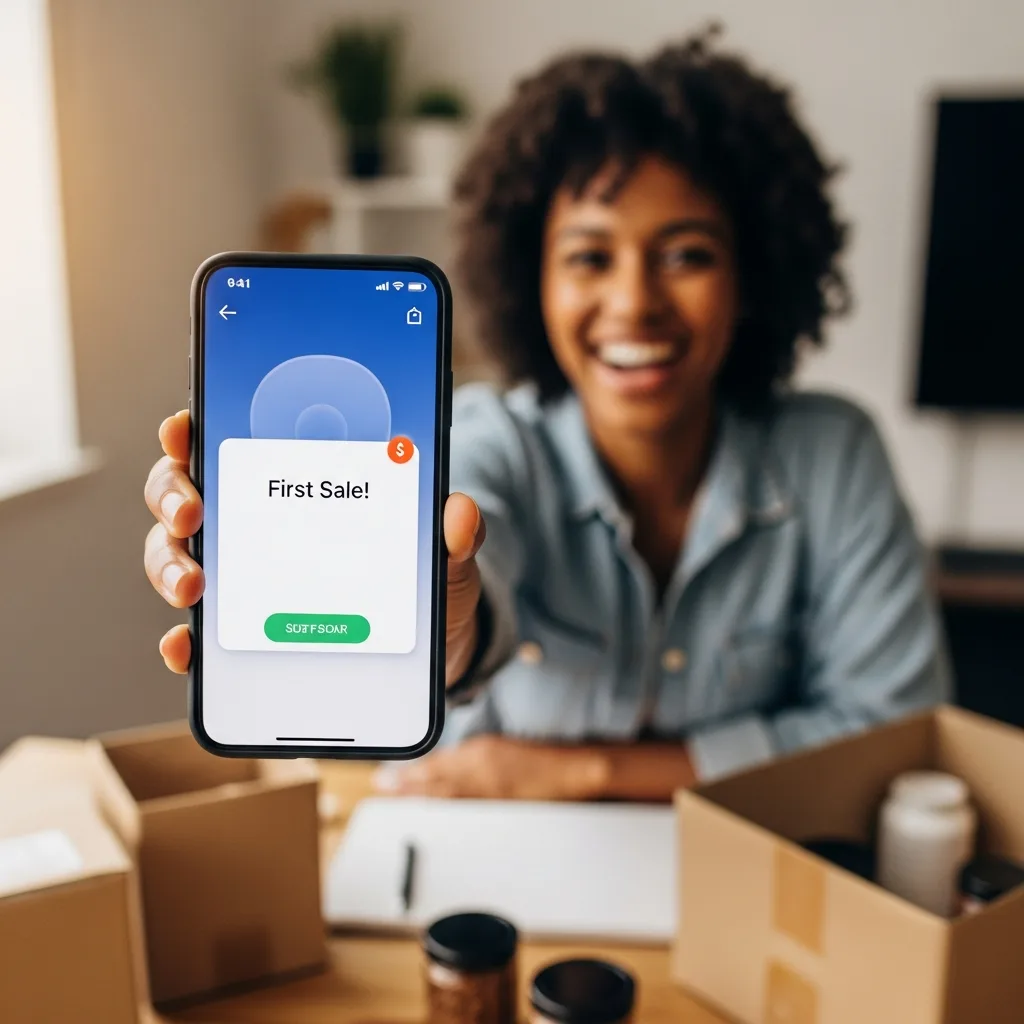
Step 3: Get Loud, Get Paid, Get Better
The engine is built. Now you need to add fuel and start driving. For many creatives, this is the scariest part: “marketing.”
Relax. Forget “marketing.” Just document your journey.
The creator economy isn’t just a $250 billion market; it’s a fundamental shift in how people connect with businesses. We don’t want slick, corporate ads. We want to see the person behind the product. We want the story.
So, show them.
Use Instagram Reels, TikTok, or Twitter threads to simply document what you’re doing. The messy parts. The small wins. The late nights. The finished product. Tony Dinh built a massive following on Twitter just by being transparent about his process of building and launching his small software projects. People connect with that realness. Stories sell, not sales pitches.
Go Back to Your People. Remember those Reddit threads and Facebook groups where you validated your idea? Go back there. Don’t spam your link. Add value. Answer questions. Share your experiences. When it feels natural, mention what you’ve built. Say, “Hey, I know we were all frustrated with X, so I actually made a thing to solve it. Hope it helps.” Sales will follow value.
Your First 10 Customers Are Everything. Not your first 1,000. Your first 10. Obsess over them. Give them an incredible experience. Write them a thank-you note. Check in with them. Ask for their feedback. These first 10 people are not just customers; they are your most powerful marketing channel. Your goal is to turn them into raving superfans who will do the selling for you.
Your Hustle Starts Now
Let’s recap the battle plan. This isn’t magic; it’s a repeatable process.
- The Gut Check: You faced the Passion Paradox and defined your why.
- The Validation: You hunted for problems, not just passions, and confirmed your idea isn’t a dud.
- The Launch: You built a minimum viable business and priced for actual profit.
The dream of getting paid for your passion is real, but it doesn’t happen by accident. Passion provides the “why,” but strategy provides the “how.” We’ve given you the “how.”
The median is $200 a month, but you aren’t median. You’re a hustler. You’re part of the Tribe.
Now, go prove it.
The first step is the hardest. What’s the one action you’ll take today to move your passion project forward? Drop it in the comments below. Let’s get this money.