

You’ve told them about the side hustle. Maybe you got a long pause at the dinner table. Maybe you got a joke that wasn’t really a joke, or a worried “are you sure?” that landed harder than you expected.
If you’re working a full-time job, or running a business that’s hit a setback, that kind of doubt can feel like a second job on top of the first one. This post is for you. It’s practical, not a pep talk: how to listen to the worry, say your plan clearly, make the risk visible and small, and keep your momentum when the people closest to you aren’t clapping yet.
A note before we start: we’re not therapists, and this is general information, not medical or mental health advice. Where we make claims about stress, support and communication, they come from health bodies and universities listed at the end.
Why Their Doubt Stings More Than a Stranger’s
Good relationships matter for how we feel. The NHS says they can give you a sense of belonging and self-worth, and provide emotional support1. So when the people you’re closest to question your plan, it’s not just a business opinion. It can feel like a verdict on you.
That’s worth naming, because it changes how you respond. You don’t have to argue yourself out of the feeling. You can notice it, give it a name, and then decide what to do next. Being stoic isn’t about feeling nothing. It’s about separating what happened (someone voiced a worry) from the story you tell about it (they think I’m a failure).
The American Psychological Association (APA) adds a useful point: strong social support can make you more able to cope with problems on your own, partly by improving your self-esteem and sense of autonomy, and the most helpful people see you as capable and help you focus on next steps2. Keep that in mind. Your aim isn’t to win over every doubter. It’s to build enough support, from enough places, that you can keep going.

Step 1: Find Out What They’re Actually Worried About
“You’re crazy” is rarely the whole sentence. Underneath, there may be a worry about money, about your time, about your health, or about you getting hurt. You won’t know until you ask.
The NHS suggests being an active listener: repeat back what the person has said, or ask for more detail if it isn’t clear, so you can check you’ve understood3. In practice, that sounds like:
- “When you say it’s risky, is it the money you’re worried about, or the time it takes?”
- “What would make you feel more comfortable about this?”
- “So you’re worried I’ll burn out. Have I got that right?”
The NHS also suggests asking yourself a few questions when emotions run high: What meaning have I given this situation? Is there a difference between the facts and my opinion of it? What advice would I give someone else in my position?3 Try them before the next conversation, not during.
This takes courage. It’s easier to defend yourself than to hear the worry. But a worry you’ve heard and understood is much easier to answer than a vague mood in the room.
Step 2: Say Your Plan Out Loud, Once, Clearly
After you’ve listened, tell them what you’re doing. Cornell Health describes assertive communication as interacting in a way that respects both your rights and the rights of others4. Two of its tips are to use “I” statements that focus on how you feel in a specific situation, which reduces the likelihood the listener will feel accused or defensive, and to state your needs clearly rather than making people guess4.
Here’s a simple script built on that idea. Change the words to sound like you:
“I feel nervous when we talk about this and the conversation turns into whether I should quit. I’m not quitting my job. I’m testing this on evenings and weekends, and I’d like you to ask me how it’s going once a month, rather than telling me whether it’ll work.”
Notice what it does. It names a feeling, describes the situation, draws a line about the job, and makes one clear request. It doesn’t ask for agreement.
If the conversation gets heated, the NHS suggests taking time out and talking again when everyone is calmer3. Leaving the room isn’t losing. It’s good tactics.
Step 3: Make the Risk Small and Visible
A lot of family worry is about the unknown. You can shrink the unknown.
Start small on purpose. Mind notes that when we’re stressed it’s easy to set large or unrealistic goals, which can leave us more stressed and frustrated if we don’t reach them, while smaller, achievable goals help us feel more satisfied and in control5. That’s good advice for you, and it makes your plan easier for others to follow.
Here are some ways to make a small, visible plan:
- Show a cap. “I’m putting in a fixed amount of money and time, and I’ll stop and review if I reach it.” If you need a low-cost starting point, our guide on how to start a side hustle this weekend with zero budget shows how.
- Keep the day job going. A full-time income alongside an evening project is a much easier sell than a leap.
- Share one number, not a story. Pick a single measure, such as enquiries, sales or hours worked, and report it on a regular date. Facts calm worry better than enthusiasm does.
- Show the legal basics are covered. Our post on the five legal things to do before your first sale is a good checklist to share.
This is disciplined work. It’s less exciting than a big announcement, and it’s exactly what lets people relax.
Step 4: Set Boundaries Without Burning Bridges
Some relatives will keep doubting no matter what you show them. That’s allowed. You can love someone and still decide how much of their commentary you take on.
The NHS gives three small ways to look after yourself in relationships: set boundaries, think about what you feel able to help with, and stick with it; take time for yourself; and talk to someone you trust outside the relationship3. For your situation, that might look like:
- Agreeing that the business gets a set slot in the conversation, not every family meal.
- Choosing which updates to share with whom.
- Keeping a friend, mentor or fellow hustler as your “outside” person to think things through with.
The NHS also says it’s OK to leave a relationship that’s having a negative impact on your mental health and wellbeing3. Most family disagreements about a side hustle won’t be anywhere near that. But if the pressure goes beyond disagreement into something that makes you feel unsafe or constantly belittled, take it seriously and talk to a doctor or a qualified professional.
Step 5: Build a Support Network Beyond the Dinner Table
The APA says you may not have one person you can confide in about everything, and that’s okay. It suggests looking to different relationships for different kinds of support, such as a colleague for work problems, and choosing people you can trust and count on, so you avoid negative interactions that make you feel worse2. It also suggests peer support if your current network can’t give you what you need2.
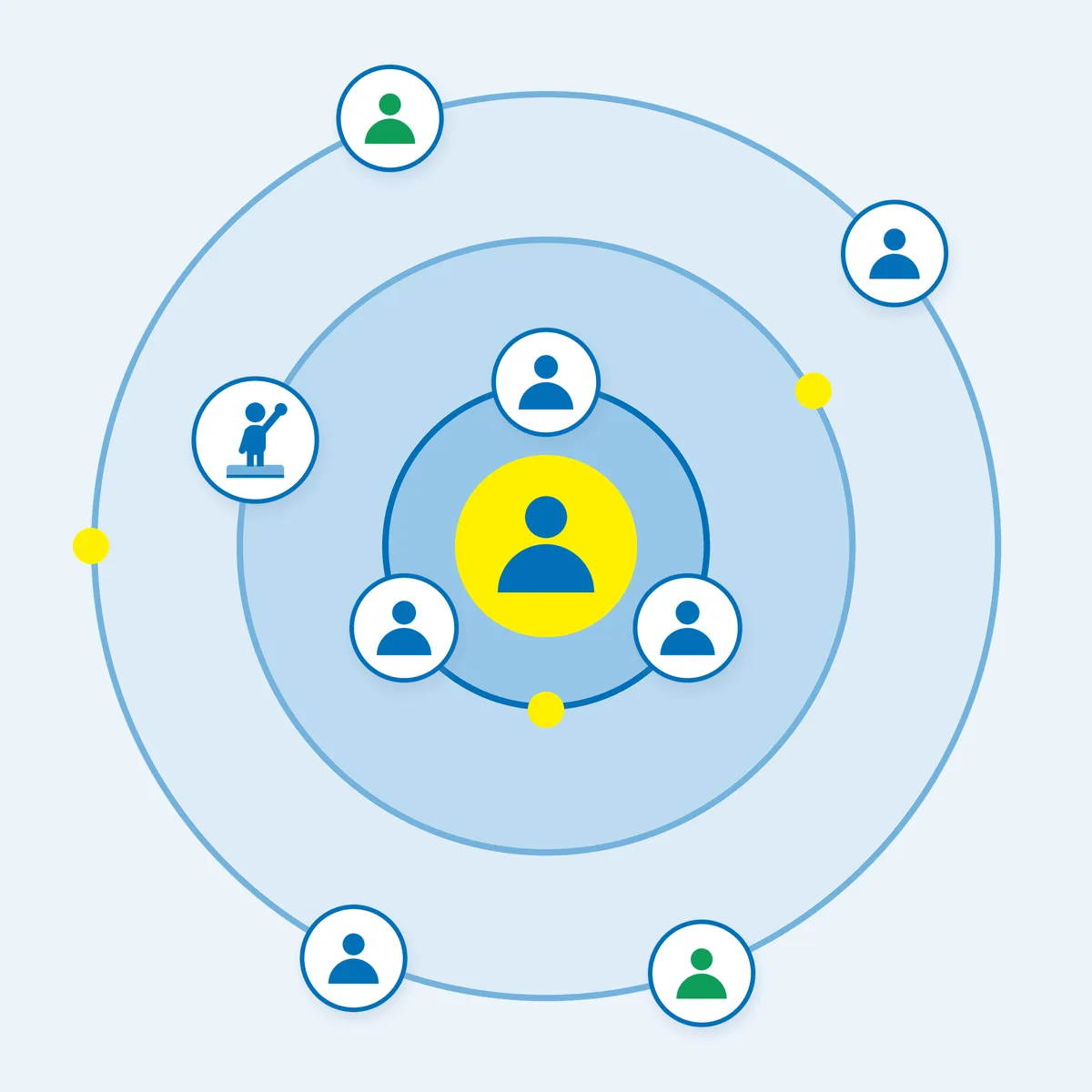
For a side hustler, this means finding at least a few people who understand the road you’re on:
- A peer group. Mind says that talking to people with similar feelings or experiences can help5. Our guide to running your first accountability group shows how to build one from scratch.
- One person a few steps ahead. Asking someone to mentor you feels awkward, so we wrote a DM template for asking someone to mentor you.
- People outside the hustle. The NHS suggests making regular time for family, friends and colleagues, and says not to rely on technology or social media alone to build relationships1. Your family doubting the hustle doesn’t mean you should pull away from your family.
The APA also says that if you’re there for others, they’re more likely to be there for you2. Be generous with your peers. Support is a two-way street.
Step 6: Keep Going When the Setback Arrives
Sooner or later something goes wrong: a launch that flops, a client who leaves, a month with no sales. This is when “I told you so” is most likely to arrive, from a relative or from the voice in your own head.
Here’s where the NHS’s resilience tips help. Its Every Mind Matters guidance suggests you:
- Start with something you’re good at and what makes you good at it.
- Think about difficulties you’ve overcome before.
- Apply those skills to the current challenge.
- Plan ahead: take 5 or 10 minutes to sit quietly and ask what the issues are, what to do first, which strategies have worked before, and whether you can look at the situation differently6.
It also recommends reflecting each week or month on the challenges you’ve faced and how you handled them, and recognising your achievements6. Mind adds that being kind to yourself and rewarding even small achievements can help with stress5.
This is courageous in the quiet sense: you keep a record that you’re someone who gets through things. When you need to show your family, or yourself, evidence that you can handle a bad month, that record is it. For a way to build the habit of facing small knocks on purpose, read our guide to rejection therapy for entrepreneurs. And if you’re feeling overwhelmed, the 5-minute routine that kills beginner overwhelm is a small place to start.
When It’s More Than Doubt
Stress can build up. Mind lists things that can make it harder to cope, including lacking support, living far from family or friends, having difficult relationships with them, loneliness and money worries, and says that if you face those barriers it isn’t your fault5. If you’re struggling, the APA says psychologists can help you develop strategies to manage stress2. A doctor or qualified mental health professional is the right person to talk to if it’s getting too much. This post isn’t a substitute.
It Works in All Ten Markets
Whether you’re building in the US, UK, Canada, New Zealand, Australia, Ireland, the Cayman Islands, the Bahamas, the British Virgin Islands or South Africa, the tools in this post are about conversations, not countries. Listen first, say your plan clearly, shrink the risk, set boundaries, build a wider circle and keep a record of what you’ve overcome. We haven’t found market-specific research on family attitudes to side hustles, so we haven’t made any claims about it.
Your Move
Here’s the move: this week, pick one person who doubts you and ask one question, “What are you most worried about?”, then just listen. Next, write your “I feel… when… I’d like…” script and use it once. Finally, choose one person outside your family to be your sounding board. Small, repeatable and calm.
If you’re ready to give your hustle a home you can point to when people ask what you’re building, start with a simple site. Launch Your Hustle →
We’re helping 1,000 ambitious people turn their side hustles into main hustles by 2028, and keeping going when the room is sceptical is part of the work. Yours can be next. You’ve got this.
Where this comes from
Every claim about wellbeing, stress, support and communication in this post comes from the health and university pages below, read on 28 October 2026. They are general guidance, not a diagnosis or treatment plan. Any example conversations are invented.
- NHS, 5 steps to mental wellbeing (Connect with other people), NHS, 2026 (read 28 October 2026). nhs.uk
- American Psychological Association, Manage stress: Strengthen your support network, APA, last updated 22 October 2024 (read 28 October 2026). apa.org
- NHS Every Mind Matters, Maintaining healthy relationships and mental wellbeing, NHS, 2026 (read 28 October 2026). nhs.uk
- Cornell Health, Assertive Communication (handout), Cornell University, 2026 (read 28 October 2026). health.cornell.edu
- Mind, Managing stress and building resilience, Mind, published May 2025 (read 28 October 2026). mind.org.uk
- NHS Every Mind Matters, Bouncing back from life’s challenges, NHS, 2026 (read 28 October 2026). nhs.uk
