

You don’t need a big group, a paid membership or a famous mentor to get sharper thinking on your side hustle. You need two other people, a clear meeting format and a date in everyone’s diary.
This guide is for hustlers looking for community, mentors and partners. It shows how to build a small, structured mastermind of three: why three works, how to pick the other two, a 90-minute meeting with hot-seat rounds and commitments, and a cadence you can keep. Use whichever platform your group already uses. We cover Zoom, Discord and WhatsApp, because their limits shape the format.
This post is general information, not financial, tax, legal or professional advice. A mastermind is peers sharing experience, not qualified advisers. For decisions that matter, talk to an accountant, a lawyer or another qualified adviser.
What a Mastermind Is (and Isn’t)
The idea is older than video calls. The Napoleon Hill Foundation quotes Hill’s definition from Think and Grow Rich: “Coordination of knowledge and effort, in a spirit of harmony, between two or more people, for the attainment of a definite purpose”1.
Notice the words “two or more”. Nothing in that definition says the number is fixed. Three is our recommendation, and we explain the reasoning below.
A well-known modern version is a structured peer group. The Entrepreneurs’ Organization (EO) runs Forum, which it describes as a confidential monthly gathering of 6 to 10 members, led by a trained peer moderator, who share experiences rather than give advice2. EO’s own writing notes that a Forum is often called a mastermind3.
A three-person mastermind borrows that structure and shrinks it. It isn’t:
- A networking club. Nobody pitches.
- A mentoring relationship. There’s no teacher or student. Everyone brings problems and shares experience.
- A big accountability group. If you’d like a wider circle first, our guide to running your first accountability group covers groups of several people with a weekly written check-in. This post is the smaller, deeper version.
Why Three?
This is our own reasoning, not a research finding. We can’t point to a study that proves three is the best size, and we won’t pretend there is one. Here’s why we’d start there.
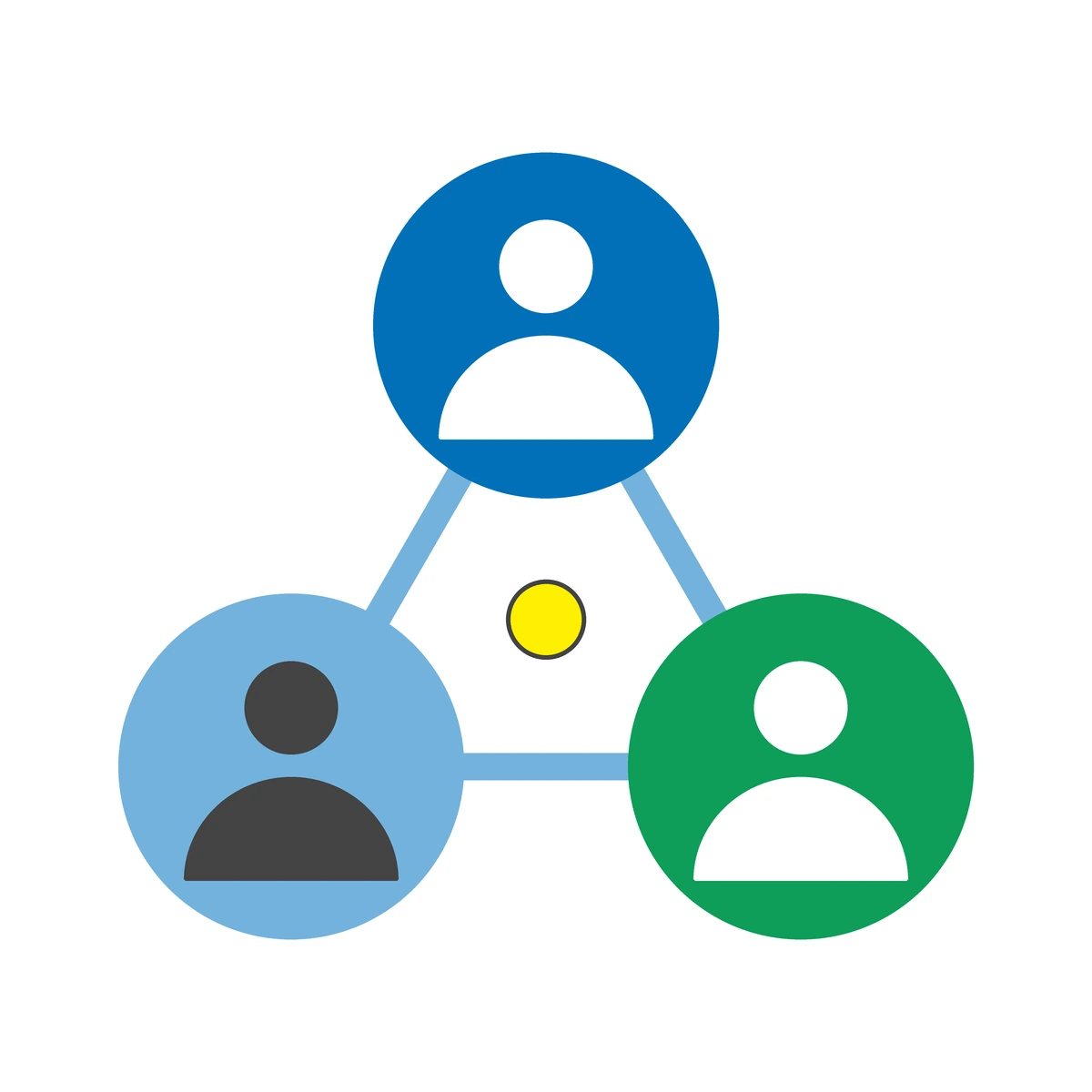
- Airtime. In a 90-minute meeting, three people get 30 minutes each. With six, it’s 15. The sums are simple, and they matter when each person wants a proper hot seat.
- Fewer calendars. A slot for three is easier to find than one for six.
- Nowhere to hide. In a trio, everyone speaks in every round. A lab study from 1979 by Latané, Williams and Harkins found that people clapping and shouting made less individual effort in groups than alone, and that the drop grew as groups got bigger4. It was a physical task, not a business discussion, so treat it as a reason to keep groups small rather than as proof.
- It survives a no-show. If one person is away, two can still meet.
There are trade-offs. Three people bring fewer viewpoints than the 6 to 10 members of an EO Forum2. If two members disagree, the third carries a lot of weight. If one member drops out for good, you’re a pair. Decide early whether you’d add a fourth person or stay as two.
Pick Your Two Co-Members
The people matter more than the platform. Here’s a short checklist.
- A similar stage, not the same business. You want people who understand your problems without competing with you. EO deliberately avoids placing direct competitors in the same Forum, to keep the group open and trusting5. Take the same approach.
- Different strengths. One person who’s strong on sales, one on operations and one on content gives each hot seat a wider view. This is our suggestion.
- A matching appetite for effort. Ask each person: will you show up, prepared, every time?
- Respect for confidentiality. EO lists strict confidentiality as a core principle2. If you suspect someone will repeat what’s said, don’t invite them.
- Location. Different countries can be a strength, because you see how another market behaves. They also affect timing, covered below.
Looking for mentors or partners? A mastermind is made of peers, so don’t expect a mentor to sit in your trio. Instead, invite a mentor to join one session as a guest and take the hot seat for a question you’d like answered, or ask a person you admire to be your guest speaker twice a year. And if you hope to find a business partner, a mastermind is a low-risk way to see how someone thinks, listens and follows through before you discuss shared money. Try a small joint project first and then decide. These are our suggestions.
A quick chemistry check: hold a short call with each candidate, agree three sessions as a trial, then review.
Pick the Platform Your Group Already Uses
Use what everyone already has installed. The best tool is the one you’ll open on the day. A few facts shape your meeting design.
Zoom. Zoom says that almost all meetings hosted by Basic (free) users are limited to 40 minutes when a host and at least one participant are present. Paid licences extend that to 30 hours6. A 90-minute mastermind on a free host will cut off mid-hot-seat. Either have a member with a paid licence host, or use the 35-minute format below.
WhatsApp. WhatsApp says its group calls have no time limit and take up to 32 people, and you can schedule a call in the group chat7. The chat also becomes your between-meeting channel for quick wins and reminders. For three people, it’s often the easiest option.
Discord. A Group DM holds up to 10 members, including you, and Discord says any member can start a voice or video call from it. You can pin messages in the DM too8. That’s handy for pinning your ground rules and the current commitments.
Whatever you choose, keep the schedule, the rules and the commitment log in one place.
The 90-Minute Meeting Format
EO describes a typical Forum session as opening check-ins, member updates, deep dives where a member brings a real situation and the group asks questions and shares experience, and takeaways where each member states what they’ll do next5. We’ve adapted that for three people. The time boxes are ours; adjust them to suit your group.
| Time | What happens |
|---|---|
| 0:00 to 0:10 | Check-in and last time’s commitments. Each person gives a one-line update and reports done, not done, or changed, about 3 minutes each. |
| 0:10 to 0:30 | Hot seat 1 (20 minutes). |
| 0:30 to 0:50 | Hot seat 2 (20 minutes). |
| 0:50 to 1:10 | Hot seat 3 (20 minutes). |
| 1:10 to 1:25 | Commitments. Each person states what they’ll do before the next meeting, about 5 minutes each. |
| 1:25 to 1:30 | Close. Confirm the next date and who keeps the notes. |
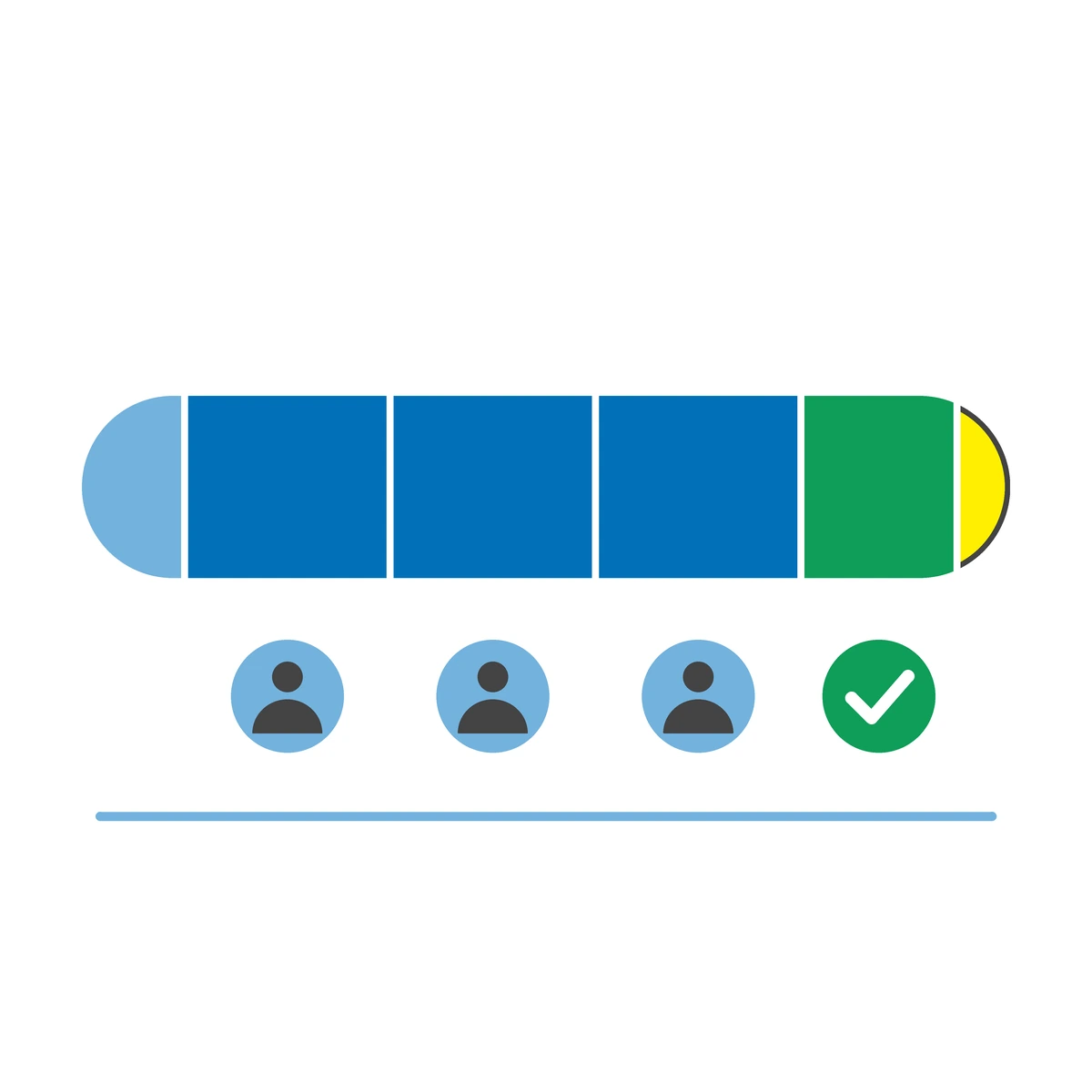
The 35-minute version for free Zoom: a 5-minute check-in, one 15-minute hot seat, 10 minutes for commitments and 5 minutes to close. Rotate the hot seat, so each person gets one every third session.
Rotate a timekeeper each meeting. Without one, the first hot seat eats the hour.
How to Run a Hot Seat
A hot seat is a focused slot where one person brings a real problem and the other two help. Here’s one way to run 20 minutes.
- Ask (5 minutes). The person in the hot seat explains the situation and the specific question they want help with. The others stay quiet and take notes.
- Clarify (5 minutes). The others ask questions only. No solutions yet. Questions like “What have you tried?” and “What would a good result look like?” do the heavy lifting.
- Share experience (8 minutes). Each of the others speaks in turn.
- Summarise (2 minutes). The person in the hot seat says what they heard and what they’ll do about it.
Share experience, don’t give orders. An EO member writes that most Forum organisations train members to avoid giving advice. Instead, members share a similar experience they or someone they know has had, the action taken and the outcome, and the article suggests opening with “In my experience”3. The person in the hot seat hears several real stories with different outcomes, then reaches their own conclusion3.
It works for three people too. “When I raised my prices, I lost two customers and kept the rest” beats “You should raise your prices”, because the person can weigh it against their own situation.
A good hot-seat question is specific and decision-shaped. “How do I grow?” is too big. “Should I accept a standing order at a lower price?” is just right.
Ten Hot Seats From Ten Markets
To show what these questions look like, here are ten invented examples. None is a real business, and the amounts are made-up US dollar figures.
- US: “My online print shop brings in about $1,200 a month. Should I raise prices by 10% or cut costs?”
- New Zealand: “A café wants a standing order worth about $900 a month if I give them 20% off. Do I say yes?”
- Australia: “I’ve rewritten a $3,000 quote four times. What am I afraid of?”
- Cayman Islands: “My weekend charter-boat tours sell out in high season. How do I fill quiet midweek slots?”
- The Bahamas: “My pop-up catering side hustle has a waiting list of three events. Do I hire help or turn them down?”
- British Virgin Islands: “I do one-off boat-cleaning jobs at $80 each. Should I try a $150 monthly plan?”
- South Africa: “A bookkeeping client pays $400 a month. A second one offers $250. Is it worth taking on?”
- UK: “I earn about $2,000 a month on the side. How do I know when it’s time to cut my day-job hours?”
- Canada: “My online course has made $300 in four months. Do I pivot or keep promoting?”
- Ireland: “I could pay a part-time helper $500 a month. What should I hand over first?”
Each question is specific, has a number in it and ends in a decision. That makes a hot seat easy to answer.
Commitments That Stick
The meeting is only half the point. The other half is what each person does before the next one.
Research on “implementation intentions” supports being specific. Gollwitzer and Sheeran’s 2006 meta-analysis of 94 independent tests found that spelling out the when, where and how of a goal in advance (“If situation Y is encountered, then I will do X”) had a positive effect of medium-to-large size on goal attainment (d = 0.65)9. In plain terms, planning when and where helps people act.
So write commitments in that shape. Here are some examples:
- “If it’s Tuesday at 7 p.m., then I’ll email five past customers asking for a review.”
- “When I close the shop on Thursday, I’ll spend 30 minutes drafting the new price list.”
- “If I haven’t sent the quote by Friday noon, I’ll message the group.”
Three rules help:
- One or two commitments per person.
- Make each one checkable. Another person should be able to tell whether it’s done.
- Record them in one place. A pinned message or shared note works. The first item in the next meeting is a review of that list.
When someone misses a commitment, ask what got in the way, then decide whether to shrink it or drop it.
Pick a Cadence You Can Keep
EO’s Forum meets monthly2. With three people, we’d suggest a different rhythm, because the group is small and each person gets only one hot seat per session:
- Every two weeks for 90 minutes if you use WhatsApp, Discord or a paid Zoom host.
- Weekly for 35 minutes if you’re on free Zoom.
- A short midweek message in the group chat: one line on how the commitment is going.
These are our suggestions. Whichever you choose, fix the day and time for the next three months and put them in everyone’s calendar now. A recurring slot beats a thread of “does Thursday work?”
After three months, hold a ten-minute review. Is everyone getting value? Does the format need to change, or does someone need to step back?
Time Zones and Clock Changes
If your trio spans countries, remember that clocks don’t change on the same dates everywhere. According to timeanddate.com’s 2026 list:
- The UK and Ireland started daylight saving time on 29 March and ended it on 25 October10.
- The US, Canada and the Bahamas started on 8 March and end on 1 November10.
- New Zealand started on 27 September, and most of Australia started on 4 October. Queensland, the Northern Territory and Western Australia don’t observe it10.
- The Cayman Islands, the British Virgin Islands and South Africa don’t observe daylight saving time at all10.
The takeaway: a fixed meeting time can move for some members and not for others, and the gap between two members’ clocks can change during the year. Agree whose local time the meeting is pinned to, check the dates, and confirm the slot after any clock change in your group’s countries.
Ground Rules to Pin at the Top
Write these down on day one. Keep them short.
- What’s said here stays here. EO lists strict confidentiality as a core principle2.
- No selling. EO’s Forums have a no-selling rule5. Nobody pitches the others.
- Experience, not orders. Start with “In my experience”.
- Show up prepared, and tell the group early if you can’t.
- Not professional advice. Nobody here is your lawyer, accountant or financial adviser.
- Review in three months, and part as friends if it isn’t working.
Your Move
Pick two people you’d like to build with. Send each a short message: “I’m starting a three-person mastermind. We’d meet every two weeks for 90 minutes, share experiences, and each commit to one action. Want to try three sessions?” Then pick your platform, fix the first date and write the six ground rules.
If you’d like a place to keep learning alongside other hustlers, Side Hustle Academy is where we’re building learning for hustlers like you. Take a look and keep an eye out for what’s coming. Visit Side Hustle Academy →
We’re helping 1,000 ambitious people turn their side hustles into main hustles by 2028. Yours could be next.
Where the numbers come from
The facts and figures in this post come from the pages below, read on 31 October 2026. Platform limits and clock-change dates can change, so check the current page before you plan around them. The reasoning for choosing three people, the meeting format and its time boxes, the cadence suggestions, the ground rules and the ten hot-seat examples (all invented, with made-up US dollar figures) are ours. Zoom, WhatsApp and Discord are named as examples of tools, not endorsements. This post is general information, not financial, tax, legal or professional advice.
- Napoleon Hill Foundation, Ezine 616 (9 November 2018), quoting Napoleon Hill, Think and Grow Rich, pp. 249-251 (read 31 Oct 2026). naphill.org
- Entrepreneurs’ Organization, EO Forum: Collaborative Learning for Entrepreneurial Growth, eonetwork.org (read 31 Oct 2026). eonetwork.org
- Glazer, B., Why experience sharing is key to entrepreneurial growth, Entrepreneurs’ Organization blog (read 31 Oct 2026). eonetwork.org
- Latané, B., Williams, K. and Harkins, S., Many hands make light the work: The causes and consequences of social loafing, Journal of Personality and Social Psychology, 37(6), 1979 (read 31 Oct 2026). doi.org
- Entrepreneurs’ Organization, Executive Peer Groups for Entrepreneurs: Why EO Forum Stands Out, eonetwork.org (read 31 Oct 2026). eonetwork.org
- Zoom, Understanding time limits for Zoom Meetings, Zoom Support (read 31 Oct 2026). support.zoom.com
- WhatsApp, WhatsApp Voice and Video Calling (read 31 Oct 2026). whatsapp.com
- Discord, Group Chat and Calls, Discord Support, updated 7 March 2026 (read 31 Oct 2026). support.discord.com
- Gollwitzer, P. M. and Sheeran, P., Implementation intentions and goal achievement: A meta-analysis of effects and processes, Advances in Experimental Social Psychology, 38, 2006 (read 31 Oct 2026). doi.org
- timeanddate.com, Daylight Saving Time Around the World 2026 (read 31 Oct 2026). timeanddate.com
