

You know what you want to sell. You just can’t get the words onto the page. The cursor blinks, the coffee goes cold, and the offer stays stuck in your head.
Here’s the fix: let a free AI assistant write the messy first draft, then you do the two jobs it can’t do for you. You check the facts and you make it sound like a real human. This guide gives you the exact prompt to copy and paste, an example of what it produces, a fact-check pass, an edit pass and a checklist to run before anything goes live. No paid plan. No “write me a page that sells” hope-and-pray prompting. Just a process.
Why Let AI Write the First Draft (and Not the Last)
A first draft is the hardest page to write and the cheapest page to throw away. That makes it a perfect job for an AI assistant. It’s fast, it doesn’t get precious about its words and it will happily give you three versions of a headline while you’re still deciding what to call your offer.
But it has one habit you must plan for. OpenAI’s own research explainer describes hallucinations as “plausible but false statements” and says they remain a fundamental challenge for all large language models1. In plain English: the draft can sound confident and still be wrong. On a sales page, “wrong” means a promise you can’t keep, a feature you don’t offer or a review nobody ever wrote.
So the rule for this whole post is simple. AI drafts. You decide. Every sentence that goes live is one you’ve read, checked and chosen to keep.
What You Need Before You Open the Chat
You don’t need a paid plan. OpenAI’s pricing page says the free version of ChatGPT “is available to everyone”2, and Google’s Gemini subscriptions page lists a Free plan with access to the Gemini app3. Free tiers come with limits on usage and features, so you’ll want a prompt that gets a solid draft in one or two goes rather than twenty. If you’re still choosing a tool, our day-1 guide to the four free AI tools worth learning first covers that. This post is about what to type once you’ve picked one.
Before you open the chat, write down five things in a note. Two minutes, tops:
- What you sell. One sentence. “A two-hour beginner bike-repair workshop”, not “empowering cyclists”.
- Who it’s for. Be specific. “Adults who commute by bike and have never fixed a puncture.”
- The problem it solves. In their words, not yours. “I’m scared I’ll get a flat on the way to work and be stuck.”
- The facts. Price (we’ll use USD), duration, what’s included, what’s not, where and when, how people book, and what happens if they need to cancel under your own policy.
- What you can prove. Real reviews you have permission to use, real numbers you can back up, real credentials. If the honest answer is “nothing yet”, write that down. It matters.
That last item is the one most beginners skip, and it’s the one that keeps you out of trouble. Hold that thought until the fact-check pass.
The Exact Prompt (Copy and Paste)
Copy everything in the box below into your free AI assistant. Replace every line in square brackets with your own facts from the note you just wrote. Leave the rules exactly as they are. They’re what stop the draft drifting into hype.
You are helping me write the first draft of a simple sales page.
Write in plain, friendly UK English. Short sentences. No hype.

MY OFFER
- What I sell: [one sentence]
- Who it is for: [specific person]
- The problem it solves, in their words: [quote or paraphrase]
- Price: [amount and currency, e.g. USD 45]
- What is included: [list]
- What is NOT included: [list]
- Where, when and how long: [details]
- How to book or buy: [one clear action]
- My cancellation and rescheduling policy: [your actual policy]
- Proof I can actually show: [real reviews with permission, real
  credentials, or "none yet"]

RULES - follow every one
1. Use ONLY the facts above. Do not invent features, numbers,
   reviews, testimonials, awards, credentials or customer names.
2. Make NO claims about income, earnings, savings, results,
   success rates or conversion rates.
3. Do not promise outcomes. Describe what the buyer gets, not what
   will happen to them afterwards.
4. Do not use fake urgency, countdowns or "only X left" lines.
5. If you need a fact I have not given you, write [CHECK: what is
   missing] instead of guessing.
6. If "Proof I can actually show" says "none yet", leave the proof
   section out completely.

STRUCTURE
1. Headline (under 12 words) plus 2 alternatives
2. One-line subheading
3. "Is this for you?" - 3 short bullets
4. What you get - bullets from my included list
5. What this is not - bullets from my not-included list
6. How it works - 3 numbered steps
7. Price and booking details
8. FAQ - 4 questions a nervous first-time buyer would ask, answered
   only from my facts
9. One call to action

After the page, list every sentence that states a fact, so I can
check each one.
Two lines in there do the heavy lifting. Rule 5 turns a guess into a visible gap you can fill. The final instruction makes the assistant hand you its own fact list, which turns the next step from a hunt into a tick-box job. If the first draft ignores a rule, don’t argue with it for twenty messages. Reply with: “You broke rule [number]. Rewrite the page and follow every rule.” Then move on.
What Came Back: An Example Sales Page
Here’s a trimmed example of the kind of draft the prompt produces, using a made-up offer: a two-hour beginner bike-repair workshop at USD 45, small group, tools provided, no proof yet. Notice what’s missing as much as what’s there.
Fix Your Own Puncture: A Two-Hour Beginner Bike-Repair Workshop Learn the basics in a small, friendly group. Tools provided. Is this for you? You ride to work or for fun. You’ve never fixed a flat. You’d like to feel less stuck if something goes wrong. What you get: two hours of hands-on practice on your own bike; a group of no more than [CHECK: maximum group size]; use of all tools on the day; a printed one-page repair sheet to take home. What this is not: a full bike service; repairs done for you; a qualification. How it works: 1. Book your place online. 2. Bring your bike and wear clothes you don’t mind getting oily. 3. Practise each fix with guidance until you’ve done it yourself. Price: USD 45 per person. Booking link: [CHECK: booking link]. Cancellation: [CHECK: your policy]. FAQ: Do I need my own tools? No, tools are provided. What if my bike is unusual? [CHECK: which bike types you can support]. Book your place →
No “transform your riding”. No “hundreds of happy students”. No made-up quote from “Sarah, 34”. The proof section is gone because there’s no proof yet, exactly as rule 6 asked. And the [CHECK] tags show you precisely where your facts were thin. That’s a draft you can work with.
The Fact-Check Pass
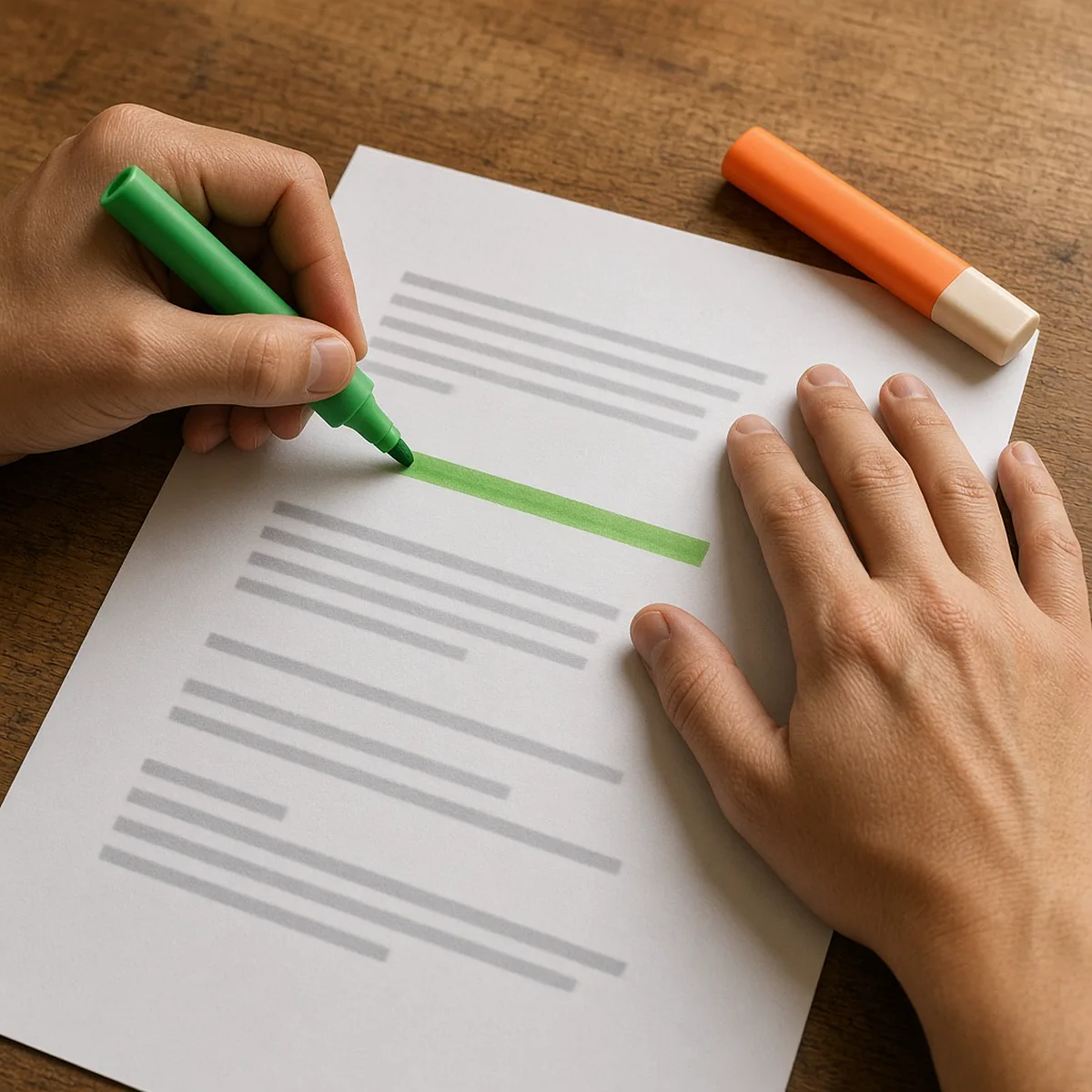
Now go through the fact list the assistant gave you, line by line. For each sentence, ask one question: can I prove this right now? Mark it green (true and I can show it), amber (probably true but I need to confirm) or red (not true, or I can’t back it up). Delete every red. Confirm every amber or cut it.
Why so strict? Because the rules on advertising claims don’t care whether you or a chatbot typed the words. In the US, the Federal Trade Commission’s small-business guide says advertising must be truthful and non-deceptive, advertisers must have evidence to back up their claims, and that proof is needed before the ad runs4. In the UK, the advertising code says marketers must hold documentary evidence for claims consumers are likely to see as objective5. Australia’s consumer regulator, the ACCC, says businesses shouldn’t guess the facts and must be able to prove any claim they advertise6.
The FTC has also shown it’s watching AI-flavoured selling specifically. When it announced Operation AI Comply in 2024, its chair said there is “no AI exemption from the laws on the books”7. The sweep included schemes accused of using AI hype to sell passive-income promises, and a case against an AI writing tool over a feature that generated reviews and testimonials7. That’s the clearest possible reason rule 1 bans invented reviews.
Three red flags to hunt for, even after the rules:
- Numbers you didn’t supply. If a figure appears that wasn’t in your brief, it’s a guess. Cut it.
- Outcome promises. “You’ll never be stranded again” is a promise. “You’ll practise fixing a puncture” is a description. Keep descriptions.
- Social proof from nowhere. Any review, rating, star count or “as seen in” that you can’t produce on request comes out.
Then fill every [CHECK] tag with a real fact, or remove the sentence it sits in.
The Edit Pass: Make It Sound Like You
A fact-checked draft is safe. It isn’t yet yours. This pass takes ten to fifteen minutes and it’s where your page stops sounding like every other AI page on the internet.
Read it out loud. Anywhere you stumble, rewrite it the way you’d say it to a friend across a table. If you’d never say “embark on your repair journey”, don’t publish it.
Swap one generic line for one specific one. The AI wrote “friendly group”. You know your workshops happen in a garage with a kettle and a radio. Say so. Specific details are believable because they’re real.
Cut a third. First drafts are padded. Delete any sentence that repeats an earlier one or says nothing a buyer needs to decide. Shorter pages are easier to trust and easier to read on a phone.
Check the headline against the promise. The headline should describe what they get, in their words. If it’s clever but unclear, choose clear. Creative is good. Confusing isn’t.
Ask for a second opinion, then decide for yourself. You can paste your edited page back into the assistant with: “Point out anything that sounds like a claim I can’t prove, and anything a nervous first-time buyer might misunderstand. Don’t rewrite it.” You get a critic, not a ghostwriter. You keep the final say.
Selling Across Borders: One Page, Ten Markets
The Side Hustle Tribe sells from and to the US, UK, Canada, New Zealand, Australia, Ireland, the Cayman Islands, the Bahamas, the British Virgin Islands and South Africa. One sales page can serve all of them if you’re careful with a few details.
- Currency. Lead with one clear price. We default to USD. If you sell locally, use your local currency and show it clearly, for example writing “USD” in front of the amount rather than a bare dollar sign, because several of our markets use the dollar sign for different currencies.
- Total price. The UK code says quoted prices should include non-optional taxes, fees and charges5, and the ACCC lists prices that leave out GST or other costs as a classic misleading price claim6. Whatever your market, show buyers what they’ll actually pay.
- Spelling and tone. Tell the assistant which English you want. Our prompt says UK English. If most of your buyers are in the US, say US English instead and stay consistent.
- Local rules. We’ve cited the US, UK and Australian regulators because their guidance is clear and public. Every one of our ten markets has its own consumer-protection rules, and this post isn’t legal advice. If you’re unsure what applies where you sell, check with your local consumer or advertising regulator before you publish.
Keep the page itself neutral. Don’t promise delivery times, refunds or availability in a country unless you’ve checked you can honour them there. That’s your policy to set, not ours.
The Human-Edit Checklist
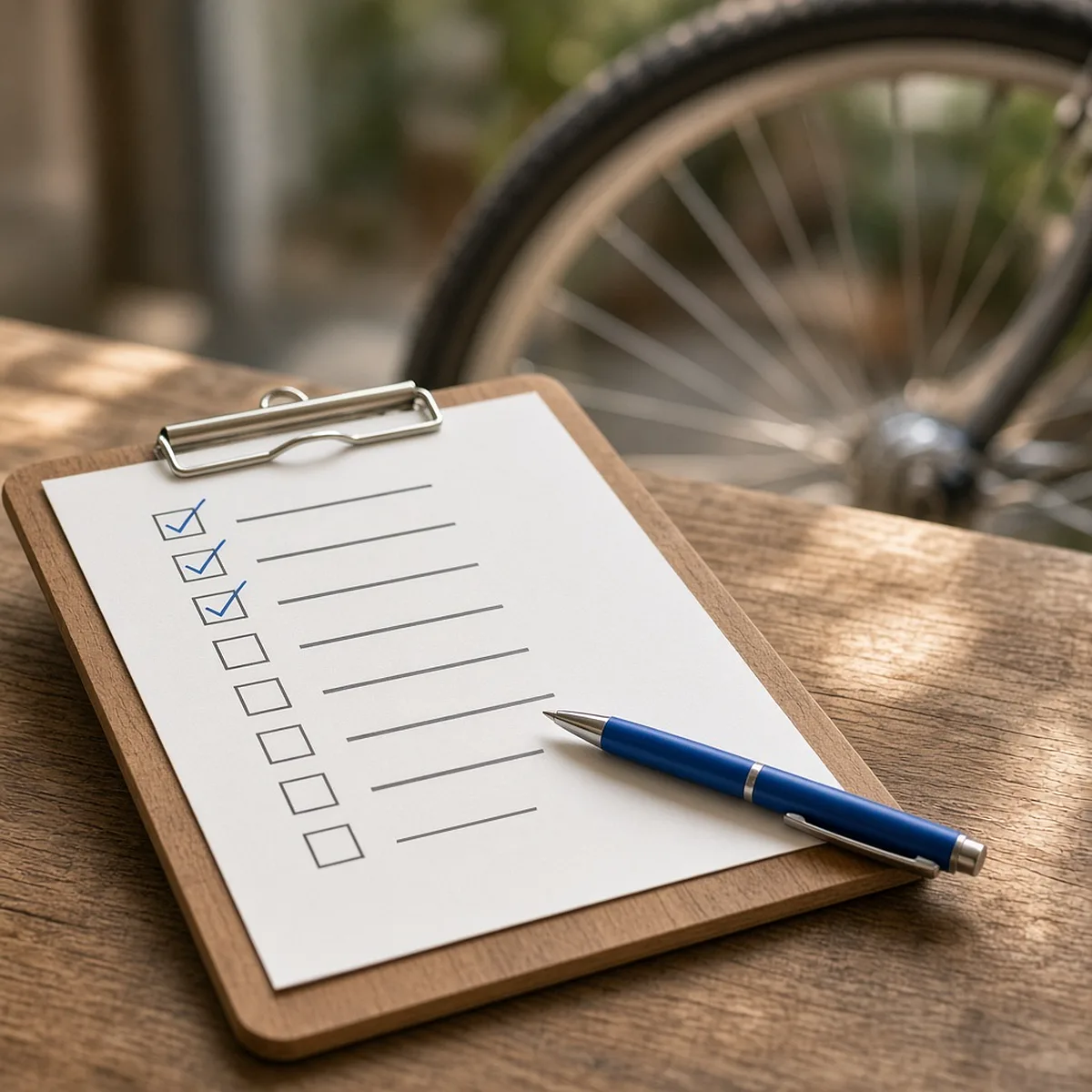
Run this before the page goes anywhere public. Every box gets ticked by a human, not by the assistant.
- ☐ Every fact on the page came from my brief, not from the AI.
- ☐ No income, earnings, savings, results, success-rate or conversion claims anywhere.
- ☐ No promised outcomes; the page describes what the buyer gets.
- ☐ No reviews, testimonials, ratings or logos I can’t show permission or proof for.
- ☐ Every [CHECK] tag is filled with a real fact or removed.
- ☐ Price is shown clearly with its currency, including any taxes or fees buyers can’t avoid.
- ☐ What’s included and what’s not included are both on the page.
- ☐ My real cancellation or rescheduling policy is stated, and I can honour it.
- ☐ No fake urgency, countdowns or “only X left” lines.
- ☐ I’ve read the whole page out loud, and it sounds like me.
- ☐ One clear call to action, and the link works.
- ☐ Spelling and currency match the market I’m selling to.
Twelve ticks, then publish. Miss one, fix it first. It’s a simple ritual, and it means you’ll never lie awake wondering what your page promised.
Your Move
Open your free AI assistant. Write your five-line brief. Paste the prompt, fill the brackets and let it draft. Then do the two jobs only you can do: check every fact and make every line sound like you. Run the checklist, and you’ll have a first sales page you’re proud to put your name on.
We’re helping 1,000 ambitious people turn their side hustles into main hustles by 2028, and a clear, honest sales page is one of the first real building blocks. You’ve got this.
Ready to put your offer out there? Grow Your Hustle →
Where the numbers come from
Free-plan details below were read from each vendor’s own pricing page in October 2026 and can change at any time. Regulator guidance is quoted for general information only and is not legal advice.
- OpenAI. Why language models hallucinate (5 September 2025; vendor research explainer; read 24 October 2026). openai.com
- OpenAI. ChatGPT Plans and Pricing (vendor pricing page; read 24 October 2026). chatgpt.com
- Google. Gemini subscriptions and plans (vendor pricing page; read 24 October 2026). gemini.google
- Federal Trade Commission. Advertising FAQ’s: A Guide for Small Business (small-business guidance; read 24 October 2026). ftc.gov
- Committee of Advertising Practice / ASA. UK Code of Non-broadcast Advertising (CAP Code), Section 03: Misleading advertising (read 24 October 2026). asa.org.uk
- Australian Competition and Consumer Commission. False or misleading claims (business guidance; read 24 October 2026). accc.gov.au
- Federal Trade Commission. FTC Announces Crackdown on Deceptive AI Claims and Schemes (press release, 25 September 2024; read 24 October 2026). ftc.gov
