
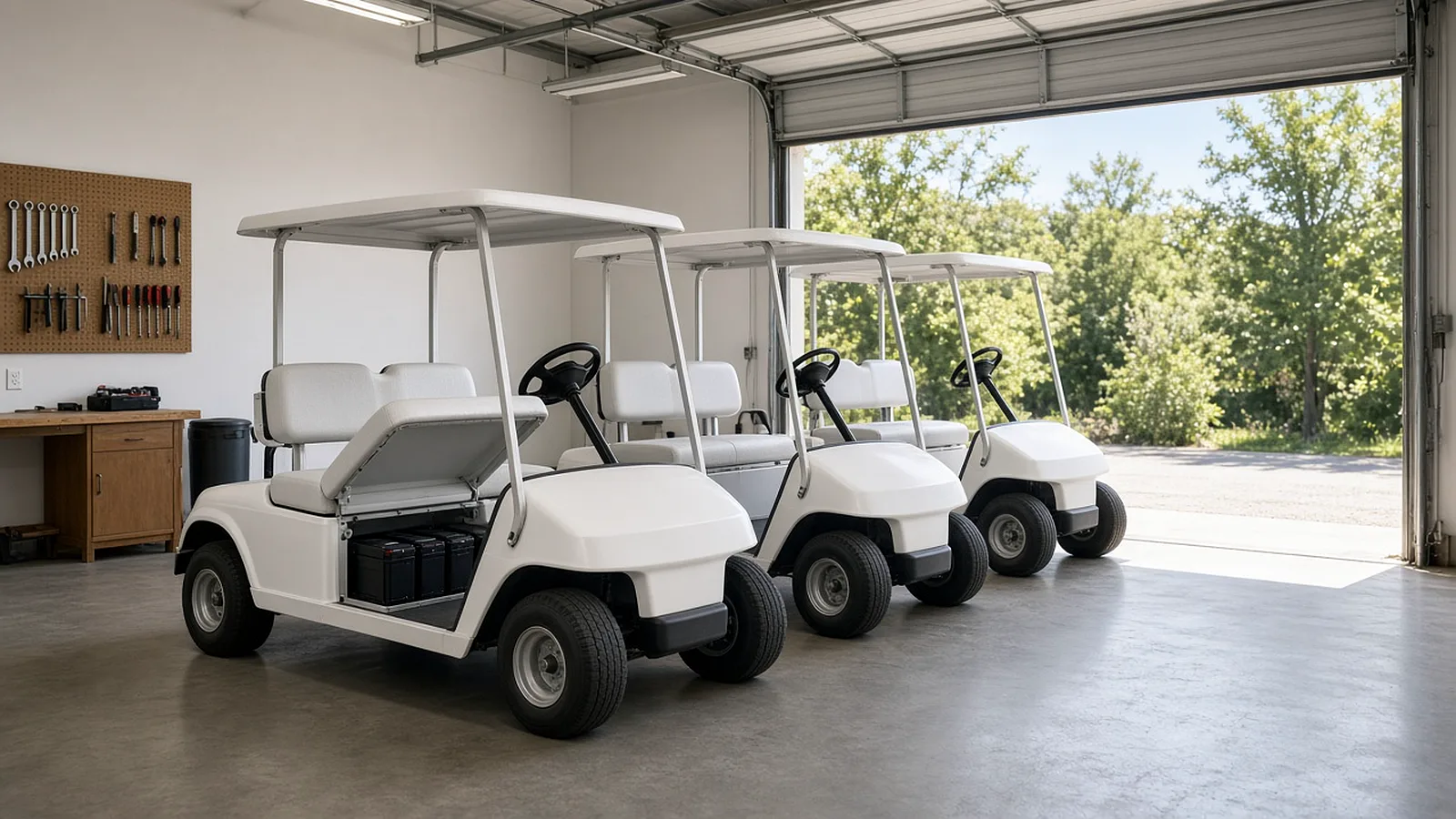
Golf carts have quietly left the fairway. They shuttle resort guests, move hospital staff, carry farm feed and, on some islands, take people shopping. Add street-legal low-speed vehicles (LSVs), electric utility vehicles and e-buggies, and you’ve got a niche that looks tailor-made for a hands-on hustler: sell the vehicles, keep them running, rent them out.
But “looks tailor-made” isn’t a business plan. This post asks a straighter question: is a business that sells and maintains golf carts and similar small EVs viable, and what do you need to check before you spend a cent?
We’ll look at what a real South African operator offers, where demand comes from across our ten markets, the money side (and where honest numbers aren’t available), and the road-use rules that can make or break the idea. One of the operators we look at, Golf Cart Connection, is a client of ours: we built and host their website and earn no commission.
Note: the rules section below covers the US, Canada, the UK, Ireland, Australia (Queensland, New South Wales and Western Australia), New Zealand, South Africa, the Cayman Islands, the Bahamas and the British Virgin Islands. It’s general information, not legal advice. Rules change and differ by state, province and municipality, so confirm with the relevant authority before you buy stock or modify a vehicle.
What This Business Actually Is
“Golf cart business” can mean several different operations, and most operators mix a few:
- New vehicle sales, often as an authorised dealer
- Used and refurbished sales, reviving tired fleet vehicles
- Service and maintenance, both workshop jobs and on-site field service
- Parts, batteries, tyres and accessories
- Rentals, from holiday hire to contract fleets
- Specialist work such as utility conversions or cross-border logistics
Each carries different risk: dealerships need stock and a manufacturer relationship, service needs skills and tools, rentals need a fleet and insurance. The real question is which you can do well, in your market, within the rules.
A Real-World Reference: Golf Cart Connection (South Africa)
Disclosure: Golf Cart Connection is a client of ours. Side Hustle Industries, which publishes this blog, built Golf Cart Connection’s website and hosts it. We earn no commission from Golf Cart Connection. Everything in this section comes only from Golf Cart Connection’s own website. We haven’t independently verified it, and including them here isn’t a recommendation of their vehicles or services. Golf Cart Connection did not commission, review or pay for this post.
To keep this grounded, here’s what one established operator says it does on its own website1. We have no figures for their revenue, customers or margins.
Golf Cart Connection (Pty) Ltd says it also trades as GCC Logistics, is based in Rustenburg in South Africa’s North West province, and was established in 20142. On its services page it lists:
- Service and maintenance for all makes of petrol and electric golf carts
- Spares and accessories for Melex and other golf cart brands
- Sales of Melex vehicles and other golf cart brands
- Golf cart refurbishment
- Contract rentals
- Exports and logistics, including golf carts, motor vehicles, trucks and tractors to Zambia, Namibia and Botswana3
The company describes itself as the official Melex dealer for a set of provinces and neighbouring countries (the exact list varies slightly between pages of its site), and says it can also sell, service and maintain other brands including EZGO, Club Car, Marshell and Yamaha2. Its product range runs from two-seat golf carts through multi-seat shuttles and buses to farm utility vehicles, plus a range of right-hand-drive vehicles it describes as “NRCS-approved” and road-legal (we haven’t verified that approval), alongside lithium and lead-acid batteries and tyres4. Customer types named on the site include government, hospitals, lodges, game farms, golf estates and private clients1.
What’s useful here is the shape of the business: sales sit alongside service, parts, refurbishment, rentals and logistics. When new-vehicle sales are slow, a fleet still needs batteries, tyres and repairs.
Where the Demand Comes From
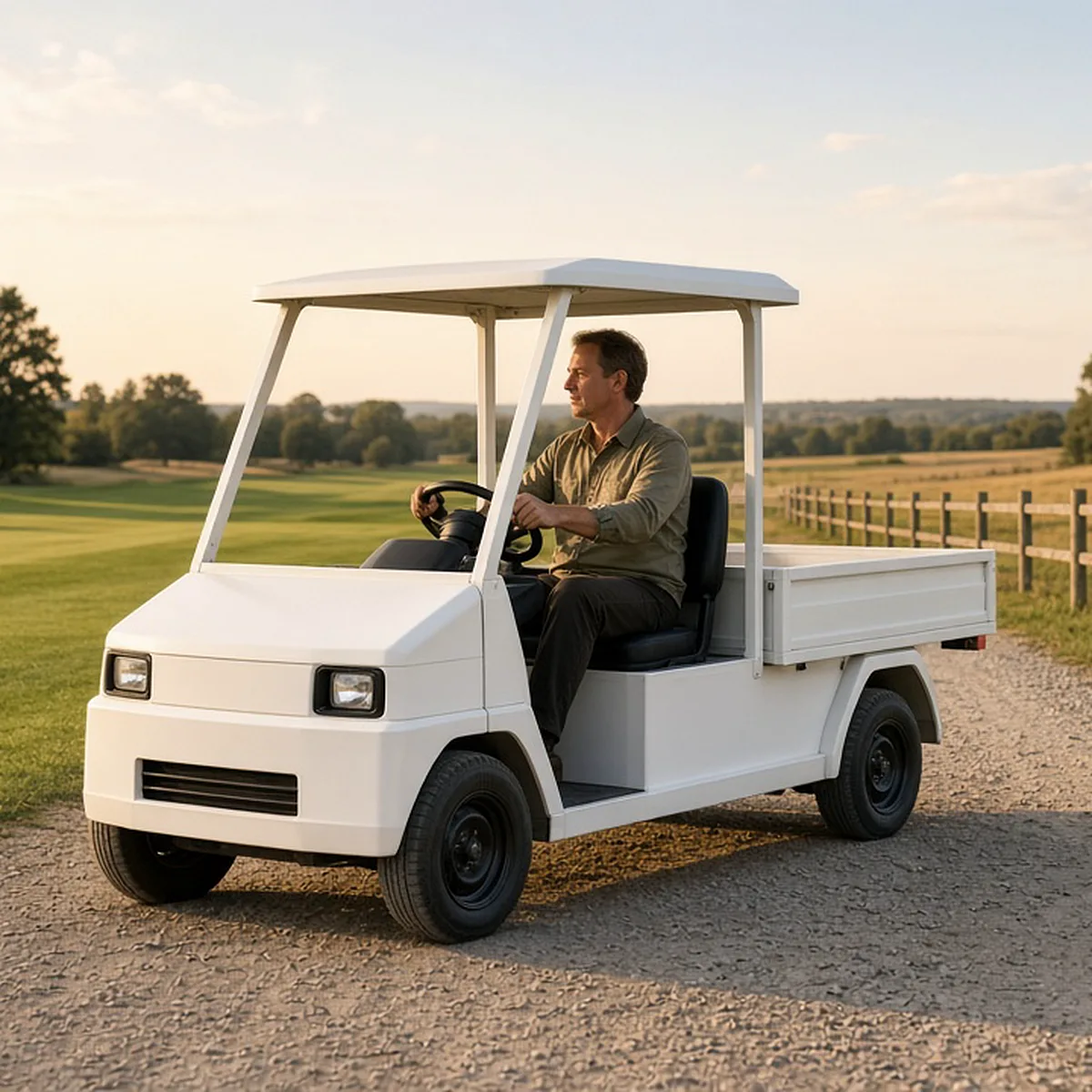
Small EVs earn their keep wherever people move short distances, slowly, over and over:
- Golf estates and clubs. Club fleets, plus residents’ private carts.
- Resorts, lodges and hotels. Guest shuttles and staff transport.
- Retirement villages and gated communities. Short trips inside private grounds.
- Campuses and hospitals. Moving staff, equipment and visitors around big sites.
- Farms and game farms. Electric utility vehicles for daily chores.
- Events and venues. Short-term rentals for shows and weddings.
- Island transport. On small islands, they can be everyday transport.
Peachtree City, Georgia, describes more than 100 miles of shared-use paths connecting neighbourhoods, shops, schools and recreation areas, and publishes rules for motorized carts on them5. In the Bahamas, the official tourism website lists golf cart rental businesses, including one on Harbour Island offering four- and six-seat carts with weekly rental discounts6. In the Cayman Islands, the Traffic Act defines golf carts separately and has a specific permit regime for low speed electric vehicles7, which tells you small EVs are on the regulator’s radar there.
We found no reliable public data on the size or growth of the golf cart service market in any of our ten markets (commercial reports are paywalled vendor estimates we couldn’t verify), so prove demand locally.
The Money Side: What We Could and Couldn’t Source
This is where most articles start throwing numbers around. We won’t.
Startup costs: not sourceable. We found no official or independent source for typical startup costs in any of our ten markets. They depend on stock, premises, a service van, a rental fleet and dealer terms. Build your budget from real quotes.
Margins on vehicle sales: not sourceable. They’re set by dealer agreements and local competition; we found no verifiable public source.
Service and parts revenue: not sourceable. We found no independent data on what share of revenue service, batteries and parts contribute. Golf Cart Connection lists service, spares, refurbishment and rentals alongside sales on its website3, but that’s a description of an offering, not a figure.
Rental rates: not sourced here. They vary by location and season, and we found no reliable source.
So test viability yourself:
- List every potential fleet within an hour of you. Golf clubs, estates, resorts, retirement villages, campuses, farms, venues.
- Call five of them. Ask who services their vehicles, what breaks most and what they wish was easier.
- Get three real supplier quotes for parts, batteries, tools and, if relevant, vehicles. Get prices in local currency from local suppliers.
- Price one service job end to end. Parts, labour, travel and time. If one job doesn’t work on paper, scale won’t save it.
- Check the rules before you buy stock (next section).
Street-Legal or Not? The Rules by Market
This is the part that decides whether you’re selling “golf carts” or “road vehicles”. Again: general information, not legal advice.
United States
At federal level, a low-speed vehicle is a four-wheeled motor vehicle whose top speed over one mile is more than 20 mph and not more than 25 mph, with a gross vehicle weight rating under 3,000 lb8. Federal Motor Vehicle Safety Standard No. 500 (49 CFR 571.500) requires LSVs to have equipment including headlamps, turn signals, tail and stop lamps, reflex reflectors, mirrors, a parking brake, a compliant windshield, a VIN, seat belts at each designated seating position, rear visibility compliance and an alert sound9.
Two points from the National Highway Traffic Safety Administration (NHTSA) matter for a service business. First, in its 1998 rule creating the LSV standard and in a 2004 interpretation letter, NHTSA has said conventional golf carts with a top speed of 20 mph or lower are not “motor vehicles” for its regulations10. Second, modifying a golf cart for use on public roads would create a motor vehicle, and NHTSA would regard the modifier as the manufacturer, responsible for certifying compliance11. NHTSA also notes that registration, inspection, insurance and operating rules are matters for the states11. In short: speed upgrades and “street-legal conversions” can turn a workshop into a manufacturer. Check your state and local rules first.
Canada
Canada’s federal definition of a low-speed vehicle covers four-wheeled, electric vehicles designed to reach at least 32 km/h but not more than 40 km/h on a paved level surface, with a gross vehicle weight rating under 1,361 kg12. Transport Canada regulates their manufacture and import, while provinces and territories decide licensing and where they can operate13. Ontario, for example, runs a pilot under which municipalities must pass a by-law to permit LSVs, with LSVs limited to roads with a maximum speed limit of 50 km/h; that pilot regulation is set to be revoked on 29 June 202714. A separate golf car pilot lets golf cars meeting set standards (including a top speed under 32 km/h) use roads with limits of 50 km/h or lower, but only in five named municipalities that have passed a by-law, and not from December to March15. Other provinces: check local rules.
United Kingdom
The Highway Code sets out that motor vehicles used on the road must be registered, have vehicle tax paid if used or kept on public roads, and be insured, and that drivers need the right licence16. Whether a particular golf buggy or small EV can be approved for road use at all is a separate technical question. GOV.UK says a vehicle that has been built, rebuilt, radically altered or imported generally needs vehicle approval (for example individual vehicle approval through the DVSA), and the DVLA won’t register a vehicle that needs approval without proof of it17. We couldn’t find an official UK page specific to golf buggies. Check local rules with the DVLA and DVSA before selling anything as “road legal”.
Ireland
Ireland’s Road Safety Authority says golf buggies are generally designed for off-road private use. If used on a public road they’re subject to the same controls as other mechanically propelled vehicles, including registration, tax, insurance and an appropriate driving licence. Registration needs a manufacturer’s certificate of conformity, and private-property-only use doesn’t require tax or insurance18.
Australia
Rules are set by each state and territory. In Queensland, golf buggies appear in the Department of Transport and Main Roads’ list of recreational vehicles that may be eligible for conditional registration, which gives non-standard vehicles limited road access under set conditions19. In New South Wales, Transport for NSW publishes a conditional registration sheet for golf buggies, covering two-seater buggies used to carry a golfer, spectator or equipment to a nominated golf course on local roads20. Western Australia’s Department of Transport says golf carts may be conditionally licensed only for approved golf course road crossings or commercial use, with applications assessed against its policy criteria21. Other states and territories: check local rules.
New Zealand
NZTA says that, apart from listed exceptions such as compliant low-powered e-scooters, powered vehicles require registration, an appropriate driver licence and must meet the equipment and safety standards for their vehicle class22. Separately, vehicles used only on a private road are exempt from registration23. A golf cart is not among NZTA’s listed exceptions, so check local rules before any road use.
South Africa
Under regulation 5(1)(i) of South Africa’s National Road Traffic Regulations, 2000, a motor vehicle designed exclusively for use on a golf course, which by its design doesn’t meet the regulations’ vehicle requirements and so may not be operated on a public road, is exempt from registration and may not be registered. For this purpose, driving it within the confines of a golf course isn’t operating it on a public road24. Vehicles exempt from registration also don’t need a licence25. A vehicle meant for public roads is a different matter: the government says that to register an imported, built or modified vehicle you first need a letter of authority from the National Regulator for Compulsory Specifications (NRCS)26. Golf Cart Connection describes its road-legal range as “NRCS-approved”4; we haven’t verified that. Anyone selling road-legal vehicles should confirm homologation, registration and licensing requirements with the NRCS and their provincial registering authority.
Cayman Islands, the Bahamas and the BVI
In the Cayman Islands, the Traffic Act (2026 Revision) defines golf carts separately. Since a 2024 amendment took effect in February 2025, its definition of “electrically powered vehicle” no longer excludes golf carts, and expressly includes low-speed vehicles, neighbourhood electric vehicles, e-scooters and mopeds. The Act treats a “low speed electric vehicle” (one the Director considers capable of no more than 30 mph) as a special purpose vehicle: it needs a permit from the Director before use on a road or public place, and may only be used where the designated speed is 30 mph or less7. The Act doesn’t spell out how a golf cart is classified for road use, so check with the Department of Vehicle and Drivers’ Licensing before selling or renting carts for road use. For the Bahamas and the British Virgin Islands, we could not find official government sources on golf cart road use: check local rules with the relevant road traffic or motor vehicle department.
Is It Viable? A Straight Answer
It can be, if the rules and local demand line up.
Points in favour:
- Fleets need ongoing care. Batteries, tyres, brakes and wiring don’t fix themselves, and an operator like Golf Cart Connection lists service, spares and refurbishment alongside sales on its website3.
- Demand is concentrated. Estates, resorts, campuses and farms are easy to list and contact.
- You can start narrow. Mobile servicing for a few fleets beats a showroom as a first step.
Points against:
- Regulation is real. In the US, modifying a cart for road use can make you the manufacturer in NHTSA’s eyes11, and every one of our markets has its own approach.
- The numbers are yours to prove: there’s no reliable public data on costs, margins or service revenue.
- Dealer relationships, stock and insurance take time and capital.
The hustler’s path: start with service and refurbishment for existing fleets, prove the demand, then add parts, rentals or a dealership only when customers are asking for them. Our guide to how to register your side hustle covers the first official step in each of our markets.
Your Move
Pick one fleet near you and ask the person who looks after their vehicles one question: “What’s the most annoying thing about keeping these running?” Then ask four more.
Be curious enough to find the real problem, disciplined enough to check the rules before you buy anything, and stoic enough to walk away if the numbers don’t stack up. We’re helping 1,000 ambitious people turn their side hustles into main hustles by 2028, and the best ones start with a customer conversation, not a stock order. We got this. Ready to test your idea? Launch Your Hustle →
Where the numbers come from
Details about Golf Cart Connection come only from their own website. Golf Cart Connection is a client of Side Hustle Industries, which built and hosts their website and earns no commission. Regulatory notes are general information, not legal advice, and were read from official sources on 17 October 2026 unless marked. Rules change; confirm with the relevant authority.
- Golf Cart Connection. Home page (offering, customer types, site footer). golfcartconnection.co.za, read 17 October 2026. golfcartconnection.co.za
- Golf Cart Connection. About Us. golfcartconnection.co.za, read 17 October 2026. golfcartconnection.co.za
- Golf Cart Connection. Services (sales, service, spares, refurbishment, contract rentals, exports). golfcartconnection.co.za, read 17 October 2026. golfcartconnection.co.za
- Golf Cart Connection. Products (golf carts, road-legal range, utility vehicles, batteries, tyres). golfcartconnection.co.za, read 17 October 2026. golfcartconnection.co.za
- City of Peachtree City, Georgia. Shared-Use Path System. Official city website, read 17 October 2026. peachtree-city.org
- The Islands of The Bahamas. No Limit Golf Cart Rentals listing, Harbour Island. Bahamas.com, official tourism website, read 17 October 2026. bahamas.com
- Cayman Islands Government. Traffic Act (2026 Revision), sections 2, 53 and 54 (incorporating the Traffic (Amendment) Act, 2024, in force 14 February 2025). Cayman Islands Legislation, read 17 October 2026. legislation.gov.ky
- US Code of Federal Regulations. 49 CFR 571.3, Definitions (low-speed vehicle). eCFR, read 17 October 2026. ecfr.gov
- US Code of Federal Regulations. 49 CFR 571.500, Standard No. 500; Low-speed vehicles. eCFR, read 17 October 2026. ecfr.gov
- National Highway Traffic Safety Administration. Federal Motor Vehicle Safety Standards; Low-Speed Vehicles, final rule, 63 Fed. Reg. 33194 (17 June 1998). govinfo.gov, read 17 October 2026. govinfo.gov
- National Highway Traffic Safety Administration. Interpretation Zozloski_1635 (golf carts, modification and FMVSS No. 500), 2004. nhtsa.gov
- Government of Canada. Motor Vehicle Safety Regulations, C.R.C., c. 1038, s. 2 (“low-speed vehicle”). Justice Laws, current to 30 September 2026. laws-lois.justice.gc.ca
- Transport Canada. Low-speed vehicle information sheet. Government of Canada, read 17 October 2026. tc.canada.ca
- Government of Ontario. O. Reg. 215/17, Pilot Project – Low-Speed Vehicles (revoked 29 June 2027, s. 12), and Municipal guidelines for the low-speed vehicle pilot program. Ontario.ca, read 17 October 2026. ontario.ca
- Government of Ontario. O. Reg. 407/21, Pilot Project – Golf Cars (revoked 3 June 2031, s. 14). Ontario e-Laws, read 17 October 2026. ontario.ca
- UK Government. The Highway Code, Annex 3: Motor vehicle documentation and learner driver requirements. GOV.UK, read 17 October 2026. gov.uk
- UK Government. Vehicle approval. GOV.UK, read 17 October 2026. gov.uk
- Road Safety Authority (Ireland). Golf buggies and ride-on lawnmowers. RSA.ie, read 17 October 2026. rsa.ie
- Queensland Government, Department of Transport and Main Roads. Recreational vehicles (conditional registration). qld.gov.au, read 17 October 2026. qld.gov.au
- Transport for NSW. Golf buggy vehicle sheet (conditional registration). nsw.gov.au, read 17 October 2026. nsw.gov.au
- Department of Transport (Western Australia). Information Bulletin IB-122H: Licensing of vehicles not designed for on-road use (last updated 16 December 2020). transport.wa.gov.au, read 17 October 2026. transport.wa.gov.au
- NZ Transport Agency Waka Kotahi. Low-powered vehicle requirements. NZTA, read 17 October 2026. nzta.govt.nz
- NZ Transport Agency Waka Kotahi. Exemption from registration. NZTA, read 17 October 2026. nzta.govt.nz
- Department of Transport (South Africa). National Road Traffic Regulations, 2000 (GN R225, Government Gazette 20963, 17 March 2000), regulation 5(1)(i), as substituted by GN R881, Government Gazette 26598, 23 July 2004, under the National Road Traffic Act 93 of 1996. Read 17 October 2026. gov.za
- Department of Transport (South Africa). Amendment of the National Road Traffic Regulations, GN R589, Government Gazette 32258, 27 May 2009 (regulation 20 as substituted). Read 17 October 2026. gov.za
- South African Government. Letter of authority for imported or rebuilt motor vehicle. gov.za, read 17 October 2026. gov.za
