

You’ve got a checkout that works for American buyers and a VAT setup that works for British ones. Then an order lands from Toronto, Wellington or Cork, and suddenly the price, the tax, the parcel and the payment button all behave differently.
Canada, New Zealand and Ireland are small, English-speaking markets, which makes them feel like easy wins. They can be. But each one breaks a different piece of the US and UK playbook, and the fixes are specific. This post compares the three, side by side, on four things: currency and price display, tax registration for sellers based abroad, shipping and customs thresholds, and the payment methods buyers expect.
Quick note: this is general information, not legal or tax advice. It covers Canada, New Zealand and Ireland (with the EU rules that apply there), compared with the US and the UK. Tax depends on what you sell, how you sell it and where you’re based, and rules change. Every figure comes from an official government, tax or customs page (payment details come from provider documentation, marked as such), read on 22 October 2026, in the local currency the page uses. Check the page, or a qualified adviser, before you act.
The US and UK Playbook in Two Paragraphs
If your shop grew up on US buyers, you’re used to showing a price before tax. In the US, sales tax is set state by state, and the Streamlined Sales Tax Governing Board notes that many states have economic nexus laws requiring remote sellers to collect and remit sales tax once they pass that state’s threshold1.
If you learned on UK buyers, the rule flips: the UK government’s Price Marking Order guidance says the price a consumer sees must include VAT2, and HMRC says an overseas seller shipping a consignment worth £135 or less straight to a UK consumer must charge and account for UK VAT at the point of sale3. We covered that UK side in detail in Selling to the UK From Abroad. Canada, New Zealand and Ireland each borrow a little from both playbooks, and none matches either one exactly.
Currency and Price Display: Three Different Rules
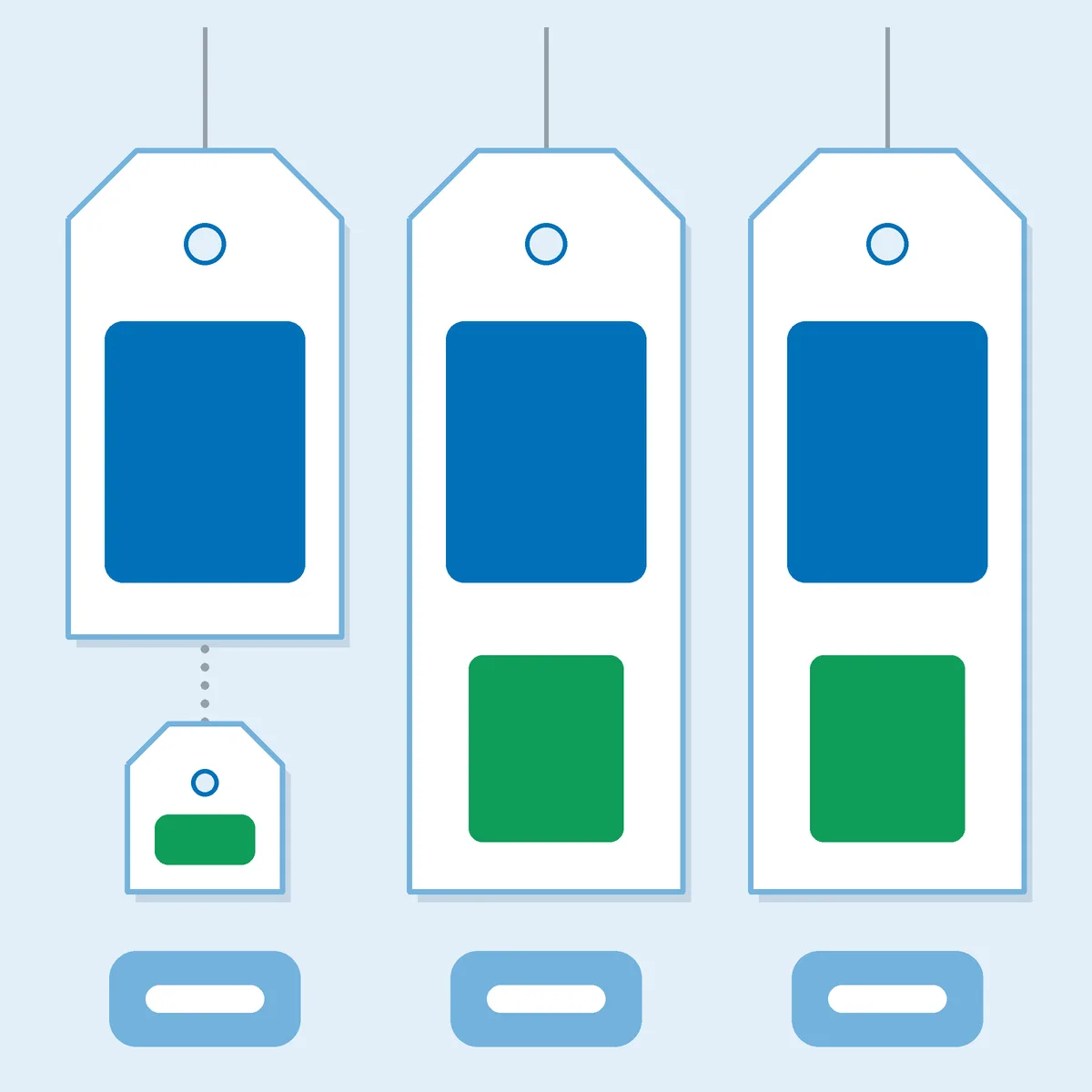
Start with the number on the page, because it’s the first thing a buyer judges.
Canada looks like the US. The Competition Bureau says drip pricing, advertising a low price and then adding mandatory fees so the price can’t actually be paid, is against the law unless the extra fixed charges are imposed by the government, such as sales tax4. So sales tax can sit outside the advertised price, but your own mandatory fees (processing, booking, admin) belong in it. The CRA also says you must tell customers whether GST/HST is included in the price or added separately, and show the rate that applies5.
New Zealand sits in between. The Commerce Commission says prices must include or be clear about the 15% Goods and Services Tax (GST), and that any surcharges must be declared before the customer buys6. A GST-inclusive price is the simplest way to be clear.
Ireland follows the UK pattern, in euro. The Competition and Consumer Protection Commission (CCPC) says prices shown to consumers must include all applicable taxes, such as VAT, with no hidden charges, and that online sellers must tell buyers about extra charges, such as delivery, before they buy7. The CCPC also says prices must be displayed in euro8.
The practical move: show CAD, NZD and EUR prices, and decide per market whether tax sits inside the price (New Zealand and Ireland) or is shown clearly at checkout (Canada). One rule for all three will be wrong somewhere.
Tax: When a Seller Abroad Has to Register
This is where the three markets differ most, and where it pays to slow down.
Canada: GST/HST
For most businesses, the CRA’s small-supplier rule says you don’t have to register for GST/HST until your worldwide taxable sales exceed C$30,000 in a single calendar quarter or over four consecutive calendar quarters9. For a seller based outside Canada, the CRA’s chart adds two points that matter: a non-resident who doesn’t carry on business in Canada generally doesn’t have to register under that rule, and you may be carrying on business in Canada even without a permanent establishment there9.
Digital sellers have a separate track. Since 1 July 2021, the CRA has applied digital-economy measures to non-resident vendors and platforms. A simplified GST/HST registration regime covers cross-border digital products and services sold to Canadian consumers (strictly, ‘specified Canadian recipients’, which also covers Canadian businesses not registered for GST/HST), while non-residents selling qualifying goods, such as goods held in a fulfilment warehouse in Canada, fall under the normal regime10. Under the simplified track, a non-resident vendor generally has to register once its revenue from those digital sales to Canadian consumers exceeds C$30,000 over any 12-month period11. Sales made through a GST/HST-registered distribution platform count toward the platform’s threshold instead of yours11.
The rate depends on where the supply is made. The CRA’s own examples show 13% HST in Ontario, 14% HST in Nova Scotia (since a 1 April 2025 cut), and 5% GST plus Manitoba’s 7% provincial sales tax when the place of supply is Manitoba5. If you do register as a non-resident without a permanent establishment in Canada, the CRA says you generally have to provide a security deposit, with an exception for smaller estimated sales and net tax9.
New Zealand: GST
Inland Revenue (IRD) sets GST at 15% and lists five types of GST registration for non-resident businesses12. Two of them catch most side hustles.
- Remote services: e-books, music, apps, software, website design, consulting and similar services supplied from outside New Zealand. IRD says you must register and charge GST when your total supplies to New Zealand customers were more than NZ$60,000 in the last 12 months, or are expected to be in the next 1213. Supplies only to GST-registered New Zealand businesses, for their business use, don’t trigger it. To show a customer is a New Zealand resident, IRD asks for two non-conflicting pieces of evidence, such as a billing address and an IP address13.
- Low-value imported goods: since 1 December 2019, overseas businesses selling physical goods valued at NZ$1,000 or less to New Zealand consumers may have to register, collect and return GST14. The trigger is NZ$60,000 of total supplies to New Zealand consumers over 12 months, and that total includes digital products and fees such as delivery15. If an online marketplace is responsible for GST on a sale, the seller isn’t16.
Currency matters here too. To decide whether a good is under NZ$1,000, IRD lets overseas suppliers choose an exchange rate source, such as the spot rate or the Customs rate, but the choice must be used consistently and updated at least every 30 days17.
Ireland and the EU: VAT
Ireland’s standard VAT rate is 23%18. The bigger story is the EU’s e-commerce package. The European Commission says that from 1 July 2021 the VAT exemption for small imported consignments up to €22 was removed, so all goods imported into the EU are subject to VAT. It also created the Import One Stop Shop (IOSS) for distance sales of imported goods in consignments worth up to €150, and an EU-wide €10,000 threshold for distance sales of goods within the EU and cross-border telecoms, broadcasting and electronic services19.
That €10,000 threshold is the one people misread. Revenue says it only applies where the supplier is established in just one EU member state; otherwise, the supplier must register for Irish VAT on those sales20. So a seller in Canada, New Zealand, the US or the UK doesn’t get a €10,000 cushion20: VAT on sales to Irish consumers is due from the first euro, collected through IOSS or at import for goods, and through the One Stop Shop’s non-Union scheme for services.
There are simplifications. Under the One Stop Shop’s non-Union scheme, a business with no establishment in the EU that supplies services to consumers in the EU can register in any one member state and declare those sales there. To use IOSS for goods, a business established outside the EU generally has to appoint an EU-established intermediary, unless it is established in, and ships the goods from, a country that has a VAT mutual-assistance agreement with the EU (such as Norway)21.
Shipping, Customs and the Bill at the Door
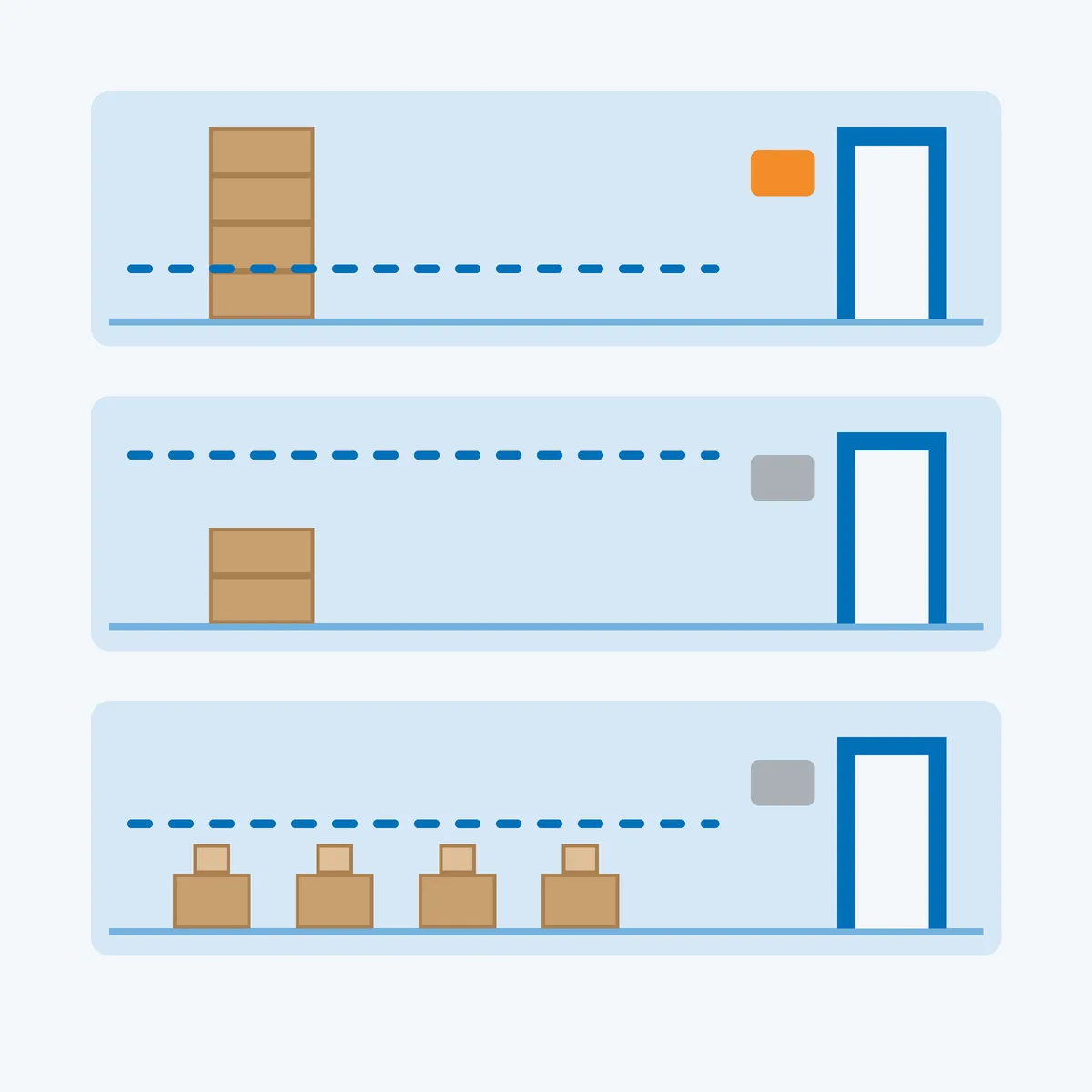
Tax at checkout is only half of it. The other half is what the courier asks your buyer to pay before they get their parcel.
Canada: the threshold depends on where the parcel comes from and how it travels. The Canada Border Services Agency (CBSA) says mail shipments of C$20 or less are duty- and tax-free from any country22. By courier, goods from the US or Mexico are duty- and tax-free up to C$40, duty-free but taxed above C$40 up to C$150, and charged both above C$150; from any other country, the courier limit is C$2022. A shop shipping from Austin and one shipping from Leeds can land very differently in Toronto.
New Zealand: New Zealand Customs says goods bought from overseas websites for NZ$1,000 or less come in without duty, and the overseas supplier collects the GST23. Customs combines items arriving at the same time for the same buyer when it works out the value, and a goods levy applies to imports unless they’re exempt23. Above NZ$1,000 a good, IRD says GST and duty are charged at the border14.
Ireland: Revenue says that from 1 July 2026 a €3 customs duty per item applies to most e-commerce packages valued at €150 or less coming into Ireland from outside the EU, with each distinct product type in a parcel charged separately. If the retailer doesn’t use IOSS, import VAT, including VAT on that €3 charge, is due on import24. For a seller outside the EU, that means choosing between collecting at checkout through IOSS or warning buyers that charges will come at the door.
Either way, tell buyers before they pay. Our guide to your first paid order from a customer you’ve never met covers how to set expectations and follow up once the parcel ships.
Payment Methods Buyers Expect to See
Beyond cards, each of these markets has a bank-debit method that payment providers support in its own currency. Here’s how one provider, Stripe, documents them. Check what your own provider offers for your account country.
- Canada: Stripe’s Canadian pre-authorized debit (PAD) payments serve customers in Canada, in CAD or USD, for Stripe accounts in Canada and the US. Stripe advises using CAD unless you know the customer’s account takes USD, and notes final confirmation can take up to 5 business days25.
- New Zealand: Stripe’s NZ BECS Direct Debit serves New Zealand customers in NZD. The business has to collect a mandate, and it can take up to two business days to learn whether a payment succeeded26.
- Ireland: SEPA Direct Debit debits euro bank accounts across the SEPA region. Customers accept a mandate during checkout, and Stripe lists a limit of 10,000 EUR per transaction27.
Bank debits suit subscriptions, deposits and repeat orders better than impulse buys, because confirmation is delayed. Ship after the payment clears, not when it’s initiated.
One Product, Three Markets: A Worked Example
Here’s the same checklist run three ways. The businesses are invented.
A print shop in Austin selling to Toronto. Prices go up in CAD, with a clear line at checkout saying whether GST/HST is added. Parcels go by courier from the US, so the C$40 and C$150 CBSA limits apply22. The owner first gets advice on whether she’s carrying on business in Canada. If she is, the C$30,000 small-supplier test counts her worldwide taxable sales, including those of any associated businesses, not just Canadian ones9.
A bookkeeping-template seller in Manchester selling downloads to Wellington. Downloads count as remote services, so he watches the NZ$60,000 test across all New Zealand sales13 and records two pieces of residence evidence per order. Prices on the New Zealand page show GST included6.
A candle maker in Calgary selling to Dublin. Prices show in euro with VAT included, and delivery costs appear before checkout7, 8. She’s outside the EU, so there’s no €10,000 cushion20. Her choice is IOSS through an EU intermediary21, or a clear note that VAT and the €3 duty per item will be collected on delivery24.
Three sellers, three different first fixes. That’s the point: the market sets the rule, not your home playbook.
Your Move
Pick the one market of the three that’s already sending you orders, and fix it first:
- Currency and price: show local currency and match that market’s tax-display rule.
- Tax: find your track (goods or digital, direct or through a marketplace) and the threshold that applies to a seller based abroad.
- Customs: check the import limit for where you ship from, and tell buyers what happens at the door.
- Payments: add the local bank-debit option if your provider supports it for your account.
Selling across borders takes discipline and a bit of courage. We’re helping 1,000 people turn their side hustles into main hustles by 2028, and three new markets is a serious step on that road.
Every market you sell into needs one clear home base for prices, policies and contact details. Get your site online with Side Hustle Hosting. Let’s freaking go!
Where the numbers come from
Every tax, customs and pricing rule above comes from an official government, tax authority, customs or regulator page; the US remote-seller point comes from the Streamlined Sales Tax Governing Board, run by its member states; payment details come from Stripe’s documentation, marked as provider documentation. All pages were read on 22 October 2026, and amounts are in the currency the page uses. This is general information, not legal or tax advice, and rules change, so check the page before you rely on it. Example businesses in this post are invented.
- Streamlined Sales Tax Governing Board (member states), Remote Seller State Guidance, streamlinedsalestax.org, 2026 (summary chart as of 11 January 2023, read 22 October 2026). streamlinedsalestax.org
- Department for Business and Trade, Price Marking Order 2004: government guidance, GOV.UK, 2025 (read 22 October 2026). gov.uk
- HM Revenue & Customs, Charging VAT on goods sold direct to customers in the UK, GOV.UK, 2026 (last updated 30 January 2026, read 22 October 2026). gov.uk
- Competition Bureau Canada, The ambush of hidden fees (news release on drip pricing), Government of Canada, 2024 (15 May 2024, read 22 October 2026). canada.ca
- Canada Revenue Agency (CRA), Charge and collect the GST/HST (which rate to charge; receipts and invoices), Canada.ca, 2026 (read 22 October 2026). canada.ca
- Commerce Commission New Zealand, Pricing, comcom.govt.nz, 2026 (read 22 October 2026). comcom.govt.nz
- Competition and Consumer Protection Commission (Ireland), Product pricing obligations for Irish businesses, CCPC, 2026 (read 22 October 2026). ccpc.ie
- Competition and Consumer Protection Commission (Ireland), Your consumer rights on pricing and price display in Ireland, CCPC, 2026 (read 22 October 2026). ccpc.ie
- Canada Revenue Agency (CRA), When to register for and start charging the GST/HST (small suppliers; non-residents; security deposit), Canada.ca, 2026 (read 22 October 2026). canada.ca
- Canada Revenue Agency (CRA), GST/HST for digital-economy businesses: Overview, Canada.ca, 2026 (read 22 October 2026). canada.ca
- Canada Revenue Agency (CRA), Cross-border digital products and services threshold amounts, Canada.ca, 2026 (read 22 October 2026). canada.ca
- Inland Revenue (Te Tari Taake), GST for overseas businesses, IRD, 2025 (last updated 22 September 2025, read 22 October 2026). ird.govt.nz
- Inland Revenue (Te Tari Taake), Supplying remote services into New Zealand, IRD, 2026 (last updated 12 September 2026, read 22 October 2026). ird.govt.nz
- Inland Revenue (Te Tari Taake), GST on low value imported goods, IRD, 2023 (last updated 28 November 2023, read 22 October 2026). ird.govt.nz
- Inland Revenue (Te Tari Taake), Registering for GST on low value imported goods, IRD, 2024 (last updated 11 October 2024, read 22 October 2026). ird.govt.nz
- Inland Revenue (Te Tari Taake), Who needs to charge GST (low value imported goods), IRD, 2023 (last updated 23 November 2023, read 22 October 2026). ird.govt.nz
- Inland Revenue (Te Tari Taake), Currency conversion (low value imported goods), IRD, 2023 (last updated 23 November 2023, read 22 October 2026). ird.govt.nz
- Revenue (Irish Tax and Customs), Current VAT rates, Revenue, 2026 (published 1 January 2026, read 22 October 2026). revenue.ie
- European Commission, VAT One Stop Shop (VAT e-commerce rules from 1 July 2021), European Commission, 2026 (undated page, read 22 October 2026). vat-one-stop-shop.ec.europa.eu
- Revenue (Irish Tax and Customs), What are the VAT thresholds?, Revenue, 2026 (published 6 May 2026, read 22 October 2026). revenue.ie
- European Commission, Register for the OSS (non-Union, Union and import schemes; intermediaries), European Commission, 2026 (undated page, read 22 October 2026). vat-one-stop-shop.ec.europa.eu
- Canada Border Services Agency (CBSA), Increase to low-value shipment thresholds and other changes (CUSMA), CBSA, 2025 (date modified 25 November 2025, read 22 October 2026). cbsa-asfc.gc.ca
- New Zealand Customs Service, Duty and GST (FAQs on buying from overseas), NZ Customs, 2026 (undated page, read 22 October 2026). customs.govt.nz
- Revenue (Irish Tax and Customs), Buying goods from outside the European Union (EU) (Excluding Northern Ireland), Revenue, 2026 (published 1 July 2026, read 22 October 2026). revenue.ie
- Stripe, Canadian pre-authorized debits (provider documentation), Stripe Docs, 2026 (read 22 October 2026). docs.stripe.com
- Stripe, NZ BECS Direct Debit (provider documentation), Stripe Docs, 2026 (read 22 October 2026). docs.stripe.com
- Stripe, SEPA Direct Debit (provider documentation), Stripe Docs, 2026 (read 22 October 2026). docs.stripe.com
