

Your first customer list probably lives in a spreadsheet, an email inbox or a checkout dashboard. It feels small. In law, it’s usually personal data, and most countries have rules about how you handle it.
The good news is that the basics are cheap: know what you hold, tell people why, keep it safe, and be ready when someone asks about it.
This is a plain-English tour of the main privacy laws in seven markets: the United States, the United Kingdom, Canada, Australia, New Zealand, Ireland and South Africa. We also name the data protection laws in the Cayman Islands, the Bahamas and the British Virgin Islands.
This is general information, not legal advice. Laws change, thresholds differ, and your situation is your own. Use this post to learn the shape of the rules, then check your regulator’s page or speak to a qualified adviser before you rely on any of it. Every law below comes from a government or regulator page we read in the week of 28 October 2026.
What Counts as Customer Data
Personal data is information that relates to or identifies a person. The UK regulator says examples include names and contact details such as email or postal addresses, phone numbers and payment information1. Ireland’s government adds IP addresses and location data to the list2.
So if you run a candle shop and keep a customer’s name, delivery address and email, you’re holding personal data. The law also cares about what you do with it: Ireland’s government explains that doing anything with personal data, including just storing it, counts as processing2.
Five Habits Most of These Laws Reward
The laws differ in the details. Read side by side, the regulator pages keep pointing at the same handful of habits. This is our summary, not a legal checklist:
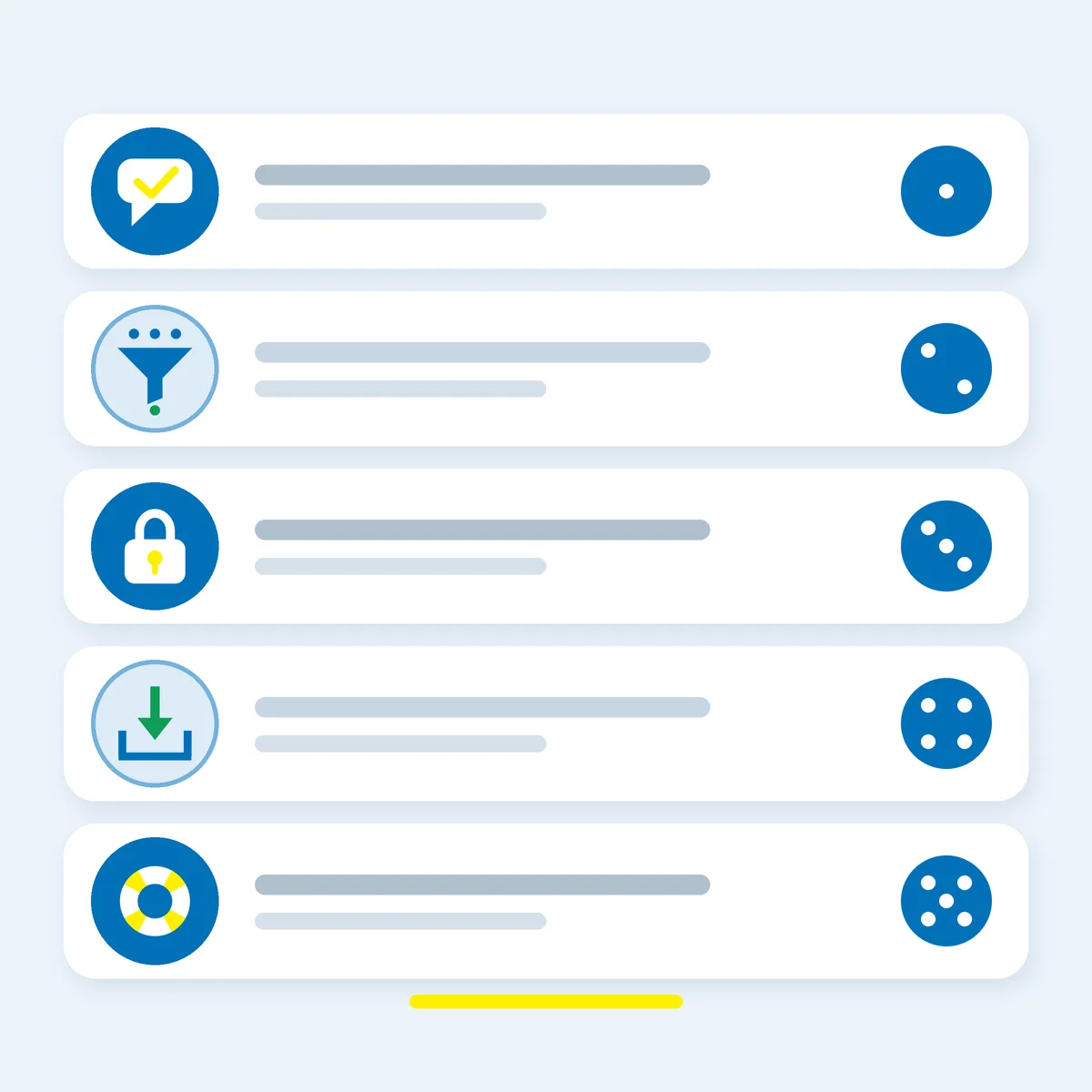
- Have a reason, and say it plainly. Ireland’s government says you can only use personal data where there’s a lawful reason, and people must be told in simple, clear language what you’ll do with it2. Canada’s federal privacy office describes ten fair information principles that private-sector businesses follow3.
- Collect only what you need. Ireland’s government describes “data protection by default” as collecting only the necessary data and keeping it for the minimum period necessary2.
- Keep it safe. Controllers and processors must keep personal data secure, according to Ireland’s government, using measures that suit the risks, which can include encryption and backups2.
- Be ready for requests. Bahamian law, for example, includes a right of access and a right of rectification or erasure4. Other countries below give people similar rights.
- Know what to do if it goes wrong. Several regulators set breach-reporting rules. We cover them country by country.
Country by Country
United States: State Laws, With California as the Example
The US approach we cover here is state law. California’s Consumer Privacy Act (CCPA), as amended by the California Privacy Rights Act (CPRA), is the best-known example5.
California’s Attorney General says the CCPA applies to for-profit businesses that do business in California and meet at least one test: annual gross revenue above $26,625,000 (the $25 million in the statute, adjusted for inflation since 1 January 20256); buying, selling or sharing the personal information of 100,000 or more California residents or households; or earning 50% or more of annual revenue from selling California residents’ personal information5. A brand-new side hustle may meet none of these tests, but note that the middle one counts people, not income. The revenue figure is adjusted every two years (next on 1 January 2027), so check the California Privacy Protection Agency’s page for the current number6.
If you are covered, the rights include knowing what’s collected, deleting it, opting out of sale or sharing, correcting it and limiting use of sensitive information5. The law protects California residents, so where your customer lives matters more than where you do5.
This post verifies California only. The US has no single federal privacy law covering all businesses7, so other states have their own laws and thresholds, and sector-specific federal rules can apply too. We haven’t checked those against state or federal sources, so look up your own state attorney general’s guidance.
United Kingdom: UK GDPR and the Data Protection Act 2018
The UK’s rules are the UK General Data Protection Regulation (UK GDPR) and the Data Protection Act 2018. The Data (Use and Access) Act 2025 amends them but doesn’t replace them8. The ICO, the UK regulator, says all of the Act’s data protection provisions are now in force8.
Small doesn’t mean exempt. The ICO says data protection law probably applies to you because you’re likely to hold people’s personal information as part of normal business, and that it covers companies of all sizes, from sole traders to global corporations1.
Many UK businesses that handle personal data must also pay an annual fee to the ICO unless an exemption applies. The ICO lists £52 for the smallest tier, £78 for the middle tier and £3,763 for large organisations9. The smallest tier covers a turnover of £632,000 or less, or ten staff or fewer9. Use the ICO’s self-assessment to check where you sit.
Two practical points. The ICO says a reportable personal data breach must go to the ICO without undue delay and within 72 hours, counted from when you discover it10. And the 2025 Act requires you to help people complain, for example with an electronic form, to acknowledge complaints within 30 days and to respond without undue delay8.
Canada: PIPEDA, and Three Provinces With Their Own Laws
Canada’s federal law is the Personal Information Protection and Electronic Documents Act (PIPEDA). The Office of the Privacy Commissioner says it sets ground rules for private-sector organisations that collect, use or disclose personal information in the course of for-profit, commercial activity across Canada3. It’s built on ten fair information principles3.
Alberta, British Columbia and Quebec have their own private-sector laws that are considered substantially similar. Organisations covered by those are generally exempt from PIPEDA for activity within the province3. PIPEDA still applies to personal information that crosses provincial or national borders3.
On breaches, the Privacy Commissioner says you must report to the Commissioner and notify affected people about breaches that pose a real risk of significant harm, and keep a record of every breach for two years, whether or not there’s a real risk of significant harm11.
Australia: The Privacy Act 1988 and the $3 Million Line
Australia’s law is the Privacy Act 1988. The OAIC, the regulator, says most small businesses aren’t covered, and defines a small business as one with annual turnover of $3 million or less12.
Several things pull a small business back in. Per the OAIC, you’re covered if you’ve had turnover above $3 million in any financial year since 2002, if you trade in personal information without consent (for example, selling your customer list), if you provide health services, or if you’re a Commonwealth contracted service provider12. The OAIC also says a business that isn’t covered can choose to opt in12.
If you are covered, the OAIC’s Notifiable Data Breaches scheme applies. An eligible data breach is a loss of, or unauthorised access to or disclosure of, personal information that is likely to result in serious harm and that remedial action hasn’t prevented, and an organisation that suspects one must quickly assess it13.
New Zealand: The Privacy Act 2020
New Zealand’s Privacy Act 2020 replaced the 1993 Act and came into force on 1 December 202014. The Office of the Privacy Commissioner sets out 13 information privacy principles for agencies, meaning organisations and businesses14. One of them, IPP3A, which deals with telling people when you collect their information from someone else, took effect on 1 May 202614.
For serious breaches, the Privacy Commissioner says to notify as soon as you practically can. The Office expects that within 72 hours of becoming aware that it’s a notifiable breach, though it calls that timeframe a guide only15.
Ireland: EU GDPR and the Data Protection Act 2018
Ireland sits under the EU’s General Data Protection Regulation (GDPR), which came into force across the EU on 25 May 2018. The Data Protection Act 2018 gives it further effect in areas where member states have flexibility2. The regulator is the Data Protection Commission (DPC)2.
Ireland’s government sets out the core duties: have a lawful reason, tell people clearly what you’re doing, keep the data secure, and report a breach likely to risk people’s rights to the DPC without delay and within 72 hours at the latest2. The same page says the most serious infringements can be fined up to 4% of annual global turnover or €20 million, whichever is greater2. That’s a ceiling for serious cases, not a typical outcome.
Laws like this can reach sellers based elsewhere. The UK version is a clear example: Article 3 of the UK GDPR applies to a business outside the UK that processes the data of people who are in the UK, where the processing relates to offering goods or services to them, whether or not payment is required16. So an overseas seller who deliberately targets Irish customers shouldn’t assume the EU’s rules stop at the border, and should check the position.
South Africa: POPIA
South Africa’s law is the Protection of Personal Information Act 4 of 2013 (POPIA). Under section 55(2), an information officer can take up their duties only after being registered with the Information Regulator, and the Regulator’s guidance note calls registration compulsory17. The Regulator’s FAQ says public and private bodies that process personal information, including sole proprietors and small businesses, must register an information officer18. The information officer is the head of the organisation by default, so in a one-person business that’s you18.
Registration happens online through the Regulator’s eServices portal, which lists the service as free19. The Regulator’s FAQ says that if no officer is registered, the head of the organisation is held liable for POPIA matters18. Another page on the Regulator’s site says bodies are ‘encouraged’ to register, but its own portal says registration ‘is not optional’, so treat it as a duty and just do it20,19.
The Cayman Islands, the Bahamas and the British Virgin Islands
All three have data protection laws. We name them here so you can find the right regulator, not to summarise them in depth.
- Cayman Islands: the Data Protection Act (2021 Revision), originally the Data Protection Law, 2017, supervised by the Office of the Ombudsman21,22. The Ombudsman’s guidance says the Act introduces globally recognised principles and aligns the Cayman Islands with the EU22.
- The Bahamas: the Data Protection (Privacy of Personal Information) Act, 2003, in force from 2 April 2007, overseen by the Data Protection Commissioner4. Its sections cover access, rectification or erasure, direct marketing and transfers of personal data outside The Bahamas4.
- British Virgin Islands: the Data Protection Act, 2021. The Government of the Virgin Islands says it governs how public and private bodies collect, process, store and share personal data23. The government announced that Melissa Brewley was appointed Information Commissioner, effective 11 May 2026, to monitor and enforce the Act23.
If You Sell Across Borders
Where your customer is can matter as much as where you are. The UK GDPR, for example, can apply to a business outside the UK that offers goods or services to people in the UK16. Our guides to selling to Canada, New Zealand and Ireland and selling to the UK from abroad cover the commercial side.
You don’t need ten privacy policies. One practical approach is a single clear notice that meets the strictest rules you’re likely to face, then adjusting with advice.
A One-Page Privacy Routine
Here’s a routine you can finish in an afternoon. It’s our own checklist, built from the habits above.
- List what you collect. Write down every place a customer’s details land: checkout, forms, email, DMs, spreadsheets.
- Cut what you don’t use. If you never use a birth date, stop asking for it.
- Write a short privacy notice. Say what you collect, why, who else sees it (such as your payment provider or courier) and how to contact you. Link it from your footer and checkout.
- Lock the basics. Use strong, unique passwords, switch on two-step verification and keep your platform’s updates current.
- Set a retention rule and a breach plan. Decide how long you keep details after a sale, and write down who you’d tell and where your regulator’s reporting page lives.
- Check registration duties and diarise a review. The UK fee9 and South Africa’s information officer registration18 are two examples. Laws change, so put a review date in your calendar.
Your Move
Here’s the move: this week, write down where your customers’ details live, delete what you don’t need, and publish a short privacy notice. Then look up your country’s regulator and bookmark its small-business page. It’s a small amount of work, and it shows customers you take them seriously. For the wider legal basics, see the 5 legal things to do before your first sale and how to register your side hustle.
Your website is where most of those details land, so make sure it sits on a host you trust. Launch Your Hustle →
We’re helping 1,000 ambitious people turn their side hustles into main hustles by 2028, and trustworthy data habits are part of building something that lasts. Yours can be next. You’ve got this.
Where the numbers come from
Every law, figure and threshold in this post comes from the government or regulator pages below, read on 28 October 2026. Rules and numbers change, so check the current page before you rely on one. This post is general information, not legal advice. Example businesses are invented.
- Information Commissioner’s Office (UK), Data protection: advice on common topics (does data protection law apply to my small business), ICO, 2026 (read 28 October 2026). ico.org.uk
- Department of Enterprise, Tourism and Employment (Ireland), Rules and obligations regarding the processing of personal data, gov.ie, last updated 11 April 2025 (read 28 October 2026). gov.ie
- Office of the Privacy Commissioner of Canada, PIPEDA in brief, OPC, 2026 (read 28 October 2026). priv.gc.ca
- Government of The Bahamas, Data Protection (Privacy of Personal Information) Act (Chapter 324A; assent 11 April 2003, commencement 2 April 2007), Laws of The Bahamas (read 28 October 2026). laws.bahamas.gov.bs
- Office of the Attorney General, State of California, California Consumer Privacy Act (CCPA), State of California Department of Justice, updated 28 August 2026 (read 28 October 2026). oag.ca.gov
- California Privacy Protection Agency, Updated Monetary Thresholds in CCPA (Civil Code § 1798.199.95(d) adjustment, effective 1 January 2025; posted 17 December 2024), CPPA, 2026 (read 28 October 2026). cppa.ca.gov
- Congressional Research Service, Data Protection and Privacy Law: An Introduction (IF11207), Library of Congress, updated 12 October 2022 (read 28 October 2026). congress.gov
- Information Commissioner’s Office (UK), The Data Use and Access Act 2025 (DUAA): what does it mean for organisations?, ICO, updated 19 June 2026 (read 28 October 2026). ico.org.uk
- Information Commissioner’s Office (UK), Guide to the data protection fee (tiers 1 to 3), ICO, 2026 (read 28 October 2026). ico.org.uk
- Information Commissioner’s Office (UK), 72 hours: how to respond to a personal data breach, ICO, 2026 (read 28 October 2026). ico.org.uk
- Office of the Privacy Commissioner of Canada, What you need to know about mandatory reporting of breaches of security safeguards, OPC, 2026 (read 28 October 2026). priv.gc.ca
- Office of the Australian Information Commissioner, Small business, OAIC, 2026 (read 28 October 2026). oaic.gov.au
- Office of the Australian Information Commissioner, When to report a data breach (Notifiable Data Breaches scheme), OAIC, 2026 (read 28 October 2026). oaic.gov.au
- Office of the Privacy Commissioner (New Zealand), Privacy principles (Privacy Act 2020), OPC, 2026 (read 28 October 2026). privacy.org.nz
- Office of the Privacy Commissioner (New Zealand), How long is 72 hours?, OPC, 16 May 2024 (read 28 October 2026). privacy.org.nz
- UK Government, UK General Data Protection Regulation (Regulation (EU) 2016/679 as it forms part of UK law), Article 3 (territorial scope), legislation.gov.uk, as amended (read 28 October 2026). legislation.gov.uk
- Information Regulator (South Africa), Guidance Note on Information Officers and Deputy Information Officers (Protection of Personal Information Act 4 of 2013), Information Regulator, 2021 (read 28 October 2026). inforegulator.org.za
- Information Regulator (South Africa), POPIA: frequently asked questions on information officers (sole proprietors and small businesses; head of the organisation; liability if no officer registered), Information Regulator, 2026 (read 28 October 2026). inforegulator.org.za
- Information Regulator (South Africa), eServices portal (Services page: Information Officer registration is free; Information Officers page: “Registration is not optional”), Information Regulator, 2026 (read 28 October 2026). eservices.inforegulator.org.za/services, eservices.inforegulator.org.za/officers
- Information Regulator (South Africa), Frequently Asked Questions (which organisations are required to register information officers), Information Regulator, 2026 (read 28 October 2026). inforegulator.org.za
- Cayman Islands Government, Data Protection Act (2021 Revision) (consolidated edition; its table of legislation lists the original as the Data Protection Law, 2017, in force 30 September 2019), Legislation Gazette No. 29, 30 April 2021 (read 28 October 2026). legislation.gov.ky
- Cayman Islands Ombudsman, Guide to Data Protection Act for Data Controllers: Introduction, Office of the Ombudsman, 2026 (read 28 October 2026). ombudsman.ky
- Government of the Virgin Islands, Melissa Brewley Appointed Information Commissioner, GOV.VG, 9 June 2026 (read 28 October 2026). gov.vg
